
Before moving on to being born of the Spirit, I want to address just one more pertinent example from our history that relates to being born of water. I’ve recently been meditating on an idea expressed by psychologist Jordan B. Peterson, which is essentially that there is a narrative world (which always follows a story or divine plot), and an objective world (the world as it is), and that there are beautiful moments where we see the two worlds touch. In other words, there are times when anyone can sense God’s hand in their lives, or throughout history. Christ Himself was the literal living embodiment of God’s will in our physical world (hence John called Him “the Word”). He was the perfect intersection of Heaven and Earth.
As we read the Book of Mormon, we see another example of these two worlds touching in the founding of America. Though many Christians sense America’s divine significance, this historical happening is not generally considered scriptural. However, Nephi’s heavenly messenger offers a scriptural perspective that is difficult to unsee. As we consider Nephi’s vision, compare the scriptural patterns about baptism we reviewed previously with what happened in actual history:
“And the angel said unto me: Behold the formation of a church which is most abominable above all other churches, which slayeth the saints of God, yea, and tortureth them and bindeth them down, and yoketh them with a yoke of iron, and bringeth them down into captivity. And it came to pass that I beheld this great and abominable church; and I saw the devil that he was the founder of it. And I also saw gold, and silver, and silks, and scarlets, and fine-twined linen, and all manner of precious clothing; and I saw many harlots. And the angel spake unto me, saying: Behold the gold, and the silver, and the silks, and the scarlets, and the fine-twined linen, and the precious clothing, and the harlots, are the desires of this great and abominable church. And also for the praise of the world do they destroy the saints of God, and bring them down into captivity.” (1 Nephi 13:5-8)
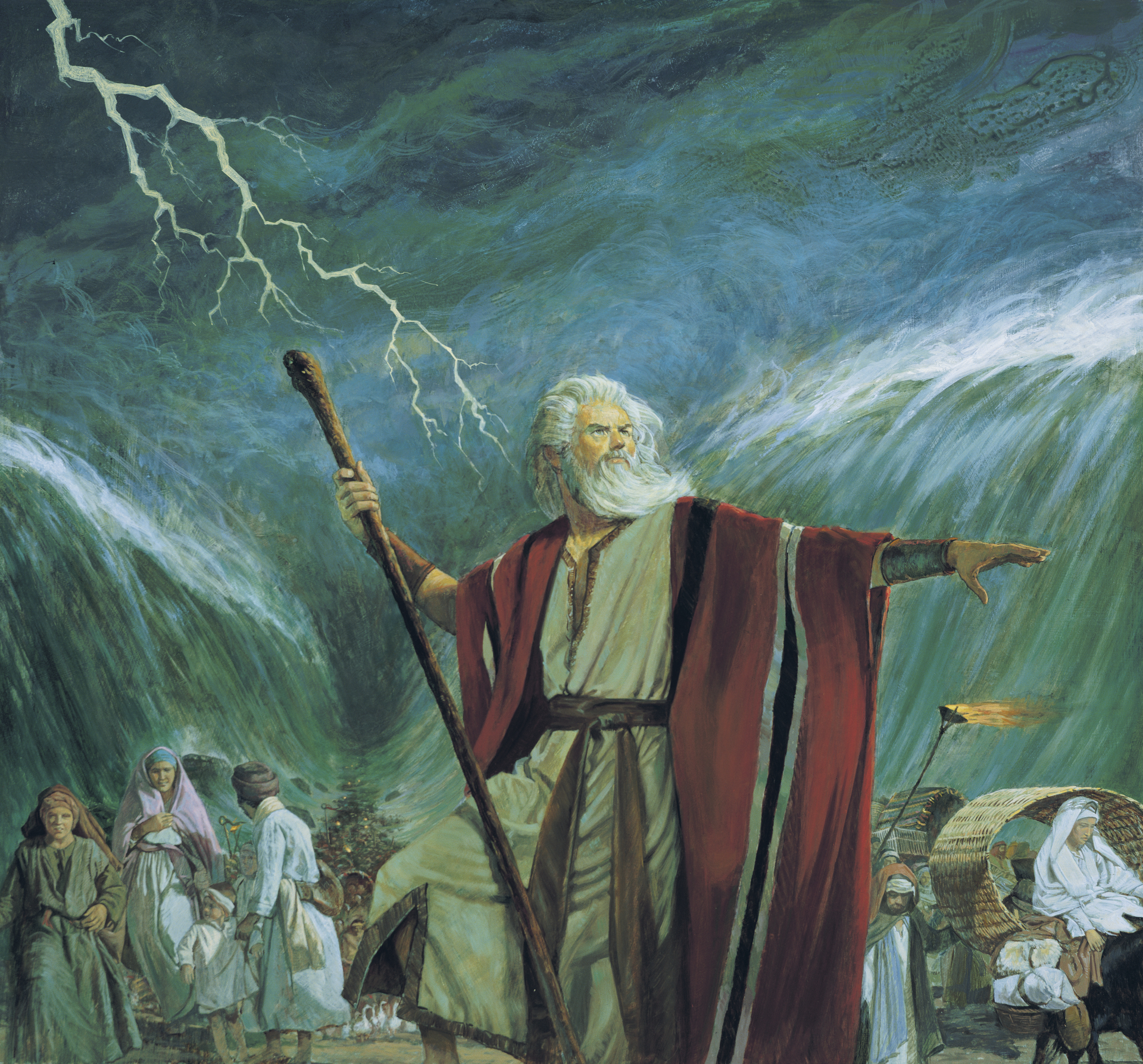
What happened in the case of Noah, Moses, and Jesus? Before they took the stage, wickedness prevailed. There was a foreign “church,” or entity, which opposed and oppressed the saints of God (the covenant body of God’s family). In the case of Moses and Jesus, it brought them “down into captivity,” both literally and spiritually. Egypt enslaved Israel, and the Greeks and Romans exercised political power over them. In both instances, Israel adopted many of their customs, beliefs, and traditions, which were always built on manmade philosophies and material desires. In Moses’s case, the Israelites had become so stained by Egypt’s influence that God had to literally wait for that entire generation to die before bringing their children into the promised land.
What happened to the early Church of Christ? It was opposed and oppressed by the Gentiles (i.e. Rome). It brought Christians “down into captivity” both literally and spiritually. Followers of Christ were persecuted and killed by the Roman Empire, and simultaneously adopted many of their customs, beliefs, and traditions. The Church that was once opposed by Rome later took its name, and shared its identity. Despite Christ’s insistence that “my kingdom is not of this world” (John 18:36), by the twelfth century the authority of the kings and emperor’s bowed to that of the Pope’s, and the Roman Church exercised power over all secular nations. Those who opposed its rule were made enemies it sought to destroy. Even among the Protestant reformation, the philosophies, beliefs, and behaviors belonging to this “church” were still ever present. Anybody can study the history for themselves; it wasn’t a pretty time.
Baptism in the Atlantic

“And I looked and beheld a man among the Gentiles, who was separated from the seed of my brethren [the Lamanites] by the many waters; and I beheld the Spirit of God, that it came down and wrought upon the man; and he went forth upon the many waters, even unto the seed of my brethren, who were in the promised land. And it came to pass that I beheld the Spirit of God, that it wrought upon other Gentiles; and they went forth out of captivity, upon the many waters.” (1 Nephi 13:12)
There’s a man (presumably Columbus) wrought upon by the Spirit of God, who paves the way out of captivity. He sets a symbolic precedent for those who come after him – “other Gentiles” likewise wrought upon by the Spirit. By the inspiration of God, they physically flee the rule of the “most abominable” church, and seek for a fresh start in a new land. Just as in the case of Noah and Moses, they went forth out of captivity by means of water. They were completely sealed off from the wicked by water.
“And it came to pass that I, Nephi, beheld that the Gentiles who had gone forth out of captivity did humble themselves before the Lord; and the power of the Lord was with them. And I beheld that their mother Gentiles were gathered together upon the waters, and upon the land also, to battle against them. And I beheld that the power of God was with them, and also that the wrath of God was upon all those that were gathered together against them to battle. And I, Nephi, beheld that the Gentiles that had gone out of captivity were delivered by the power of God out of the hands of all other nations.” (1 Nephi 13:16-19)
Consider this vignette from history as symbol for our generation. As they humbled themselves before the Lord, they were given power to come out of captivity from their oppressors. When we humble ourselves by obeying the promptings of the Spirit, it will put us at odds with spiritual “Babylon,” but the Lord will empower us just as he empowered them.
A Covenant to be Added Upon
“And it came to pass that I, Nephi, beheld that they did prosper in the land; and I beheld a book, and it was carried forth among them. And the angel said unto me: Knowest thou the meaning of the book? And I said unto him: I know not. And he said: Behold it proceedeth out of the mouth of a Jew. And I, Nephi, beheld it; and he said unto me: The book that thou beholdest is a record of the Jews, which contains the covenants of the Lord, which he hath made unto the house of Israel; and it also containeth many of the prophecies of the holy prophets; and it is a record like unto the engravings which are upon the plates of brass, save there are not so many; nevertheless, they contain the covenants of the Lord, which he hath made unto the house of Israel; wherefore, they are of great worth unto the Gentiles.” (1 Nephi 13:20-23)
What symbol is being communicated here? The book that contains the covenants of the Lord (the Bible) can be likened to the Spirit of God that wrought upon the Gentiles to “flee Babylon.” Early colonialists in North America were largely protestant Christians, seeking for religious freedom in a new world. The Spirit that inspired them to flee was the same Spirit inspiring the reformation taking place in Europe (that’s not to say that Columbus’ inspiration was the Bible per se – only that by zooming out we see the patterns of a bigger picture). It was what they read in the Bible that inspired them to repent, or turn away from the false traditions of the Roman Church.
“Wherefore, these things go forth from the Jews in purity unto the Gentiles, according to the truth which is in God. And after they go forth by the hand of the twelve apostles of the Lamb, from the Jews unto the Gentiles, thou seest the formation of that great and abominable church, which is most abominable above all other churches; for behold, they have taken away from the gospel of the Lamb many parts which are plain and most precious; and also many covenants of the Lord have they taken away.” (1 Nephi 13:25-26)
“And all this have they done that they might pervert the right ways of the Lord, that they might blind the eyes and harden the hearts of the children of men. Wherefore, thou seest that after the book hath gone forth through the hands of the great and abominable church, that there are many plain and precious things taken away from the book, which is the book of the Lamb of God.” (1 Nephi 13:27-28)
Though there was corruption to the Biblical text, I believe the emphasis of this symbol is the covenants which were neglected and distorted by the Roman church (Isaiah 24:5), thus robbing them of their status as “covenant people.” It was the corruption of the gospel by false ideas and manmade philosophies that deprived later generations of the plain and precious parts of Christ’s gospel; namely, the covenants of the Lord. Remember, this is a vision communicating spiritual truths and patterns that pertain to our day. The Bible in some sense represents the religion and covenant had by Gentiles, which had been corrupted.
Restoring the Covenant
“And it came to pass that the angel of the Lord spake unto me, saying: Behold, saith the Lamb of God, after I have visited the remnant of the house of Israel—and this remnant of whom I speak is the seed of thy father—wherefore, after I have visited them in judgment, and smitten them by the hand of the Gentiles, and after the Gentiles do stumble exceedingly, because of the most plain and precious parts of the gospel of the Lamb which have been kept back by that abominable church, which is the mother of harlots, saith the Lamb—I will be merciful unto the Gentiles in that day, insomuch that I will bring forth unto them, in mine own power, much of my gospel, which shall be plain and precious, saith the Lamb.” (1 Nephi 13:34)
After the Gentiles have stumbled – that is to say, after the missing covenants and truths have left people feeling spiritually unsatisfied, causing them to add false traditions and manmade ideas – Christ mercifully brings forth much of His gospel (not all). He does this by His own power, as opposed to man’s. His gospel was not to be restored through intense study or reformation, but by revelation.
While this was certainly an event in our recent history, I believe we gain more from this account by understanding the symbol first. To those who have abandoned Babylon and sought the Lord on their own, there has likely been some stumbling along the way. The Israelites were not immediately a mighty nation after leaving Egypt; they spent many years in the wilderness, wandering. They built idols, made mistakes, and stumbled because of the influence Egypt had had on them. Similarly, the angel who invited Lehi to begin the journey in his dream led him to “a dark and dreary waste” (1 Nephi 8:5-7). This pattern shows up in other stories as well (like the Lion King). When you flee a tyrannical empire, no matter how bad, you enter a wilderness. You stumble along the way. Simba woke up in the desert, and turned to Timon and Pumba’s hakuna matata lifestyle. For years, he stumbled, shirking all responsibility. It took an external force to get him back on track. Hence, when the Gentiles flee Babylon’s influence and come to America, they stumble. They’re trying to figure things out on their own. Their various interpretations are all lacking, still tainted by Babylon’s influence.
Enter stage right, a prophet; one sent by God. The Lord brought forth much of His gospel to redirect the now-freed Gentiles back towards Him. The Book of Mormon comes forth to renew and restore the lost covenant to the Gentiles. In connection with this covenant, the Lord restores the correct power and means whereby men can be baptized. As the Book of Mormon makes clear, America is a land bound by covenant, only to be inherited by covenant people. Just as the Israelites transitioned from the wilderness to the promised land through the Jordan river, so the Gentiles inherit the promised land by renewing their status as covenant people through baptism.
The adding of the Book of Mormon to the Bible is a symbolic representation of the gift of the Holy Ghost being added to the Spirit which initially leads people to repent. The Gentiles who left Europe were wrought upon by the Spirit; those who accept the covenant after doing so are added upon by the gift of the Holy Ghost. By adding/restoring a purer covenant, there is a greater degree of Spirit to be dispensed.
“And blessed are they who shall seek to bring forth my Zion at that day, for they shall have the gift and the power of the Holy Ghost; and if they endure unto the end they shall be lifted up at the last day, and shall be saved in the everlasting kingdom of the Lamb; and whoso shall publish peace, yea, tidings of great joy, how beautiful upon the mountains shall they be.” (1 Nephi 13:37)
The Test of Our Generation
In the past, the Lord called the Israelites out of Egypt to bring forth Zion; to be a Kingdom of Priests. By keeping the covenant the Lord had made with them, they would effectively establish heaven on earth, and be a light to the nations. We have been tasked with the same responsibility and burden. Unfortunately, they broke their covenant and did not rise up to their privileges. Their failure culminated in rejecting the Son of God, which resulted in their losing the kingdom, and the Lord seeking another people to do His work:
“Verily, I say unto you, I am the stone, and those wicked ones reject me. I am the head of the corner. These Jews shall fall upon me, and shall be broken. And the kingdom of God shall be taken from them, and shall be given to a nation bringing forth the fruits thereof; (meaning the Gentiles.) Wherefore, on whomsoever this stone shall fall, it shall grind him to powder. And when the Lord therefore of the vineyard cometh, he will destroy those miserable, wicked men, and will let again his vineyard unto other husbandmen, even in the last days, who shall render him the fruits in their seasons. And then understood they the parable which he spake unto them, that the Gentiles should be destroyed also, when the Lord should descend out of heaven to reign in his vineyard, which is the earth and the inhabitants thereof.” (JST Matthew 21:51-56)
“On whomsoever this stone shall fall, it shall grind him to powder.” This time around, it is us. By being given the gospel and covenant of the Lord, we have inherited a heavy burden to either rise up and do what the Israelites could not, or we will be ground to powder and suffer the same covenant curses the ancients did. This land is a covenant land, and is only promised to those enter into and honor said convent with the landlord. None else have any right to it, and will eventually lose it.
“And the time cometh that he shall manifest himself unto all nations, both unto the Jews and also unto the Gentiles; and after he has manifested himself unto the Jews and also unto the Gentiles, then he shall manifest himself unto the Gentiles and also unto the Jews, and the last shall be first, and the first shall be last. And it shall come to pass, that if the Gentiles shall hearken unto the Lamb of God in that day that he shall manifest himself unto them in word, and also in power, in very deed, unto the taking away of their stumbling blocks—and harden not their hearts against the Lamb of God, they shall be numbered among the seed of thy father; yea, they shall be numbered among the house of Israel; and they shall be a blessed people upon the promised land forever; they shall be no more brought down into captivity; and the house of Israel shall no more be confounded.” (1 Nephi 13:42-14:2)
This is the test of our generation. The Gentiles on this land have been offered the covenant; whether they acknowledge it or not, its impact is universal. All Americans, both within the Church and without, must either rise up to the terms of the covenant or be swept off. Merely accepting the covenant and being numbered among the house of Israel is not enough. We must, by the grace of Christ, do what the Israelites could not. Even the small handful of Gentiles who have accepted the Lord’s offer are at risk of going one of two ways (see D&C 103; 112:23-26; 3 Nephi 16:10). In many respects, the covenant Gentiles are not a distant reflection of the United States. Our course as a nation has had a direct impact on the course of the members of the Church – perhaps most clearly seen today in BYU’s recent efforts to promote Marxist and Post-Modernist ideologies as gospel. Many who have gone before us were given a covenant from the Lord. Their legacy was not in their covenant status, but in how they carried the responsibility of God’s law. In the parable of the Ten Virgins, all were called to the wedding, but only those with oil in their lamps were able to enter.
What are we going to do with what we’ve been given? How can we ensure we have oil in our lamps, or in others words, “have taken the Holy Spirit” for our guide (D&C 45:57)? What must we do to “seek to bring forth” Zion, that we might have the gift and power of the Holy Ghost?

 Establishing the Cause of Zion