A friend of mine recently authored a number of essays on the Melchizedek priesthood. In my mind, they are absolutely required reading for Latter-day Saints. Before we can establish Zion, we must understand this order of the priesthood. The priesthood after the order of Melchizedek has also been called the priesthood after the order of Enoch (D&C 76:57). These were both spiritual giants who established Zion among their respective people (JST Genesis 14:33-34). Their “order,” or in other words, their manner, pattern, culture, attitude, mode of being, etc., is the essence of Zion. It is the order of heaven itself.
It’s additionally referred to as the Order after the Son of God, not only because Christ is the exemplar of this order, but because all who live after this order become “sons of God” in their own right. “But as many as received him, to them gave he power to become the sons of God, even to them that believe on his name” (John 1:12). The Hebrew idea of a “name” also implies the concept of an order or likeness. When we act “in the name of Jesus Christ,” we’re told that what we’re doing should reflect exactly what Christ Himself would do if He were there. When we give blessings, bear testimony, pray, or take upon ourselves His name, what we’re doing ought to reflect His way of doing things. By believing in His name, we exercise faith that His example, manner, or “order” is the order of heaven, and that which will bring Zion upon the earth. We trust that His manner really is “the way, the truth, and the life” (John 14:6). And as John bears witness, to those who believed on His name He gave power to become “the sons of God” – the title belonging to citizens of heaven (Job 1:6, 2:1).
Through the Temple endowment we are all invited to participate in this Holy Order, whereby we are invited into heaven. Men and women alike have a role to play in the priesthood after the order of Melchizedek, though they fulfill separate functions. For a better understanding of this topic, I highly recommend reading the series linked below. God bless.
There is a law, irrevocably decreed in heaven before the foundations of this world, upon which all blessings are predicated—And when we obtain any blessing from God, it is by obedience to that law upon which it is predicated.”
D&C 130:20-21
One principle of the gospel that should give us faith and confidence in the Lord’s goodness is that He works by eternal law, and is no respecter of persons. Consequently, any of the blessings, miracles, or revelations that we read about in the scriptures are just as accessible to us as they were anciently. All blessings are obtained by the fulfillment of certain laws and conditions. If we learn and fulfill the conditions, we will have a right to the same blessings. Furthermore, God does not love Enoch, Moses, or Nephi more than He loves you or me, and anything He was willing to do for them, He is willing to do for us.
As the Lord told Moroni, “And in that day that they shall exercise faith in me, saith the Lord, even as the brother of Jared did, that they may become sanctified in me, then will I manifest unto them the things which the brother of Jared saw, even to the unfolding unto them all my revelations, saith Jesus Christ, the Son of God, the Father of the heavens and of the earth, and all things that in them are” (Ether 4:7).
What is the key phrase on which these blessings hinge? “Faith… even as the brother of Jared.” Notice it is not predicated on what calling you hold, your marital status, age, occupation, or anything else. All these things may be affected by whether or not you exercise great faith, but the only condition upon which these blessings flow is having the same degree of faith that the brother of Jared had. The individual circumstances of our lives will vary from person to person, depending on the course the Lord takes to get us there – but when we fulfill the law, we will receive the blessing as did Enoch, Moses, Mahonri, and many others.
This principle of equal privilege is made clear in the Lectures on Faith:
“But it is equally as necessary that men should have the idea that he is a God who changes not, in order to have faith in him, as it is to have the idea that he is gracious and long suffering. For without the idea of unchangeableness in the character of the Deity, doubt would take the place of faith. But with the idea that he changes not, faith lays hold upon the excellencies in his character with unshaken confidence, believing he is the same yesterday, today and forever, and that his course is one eternal round. – “But it is also necessary that men should have an idea that he is no respecter of persons; for with the idea of all the other excellencies in his character, and this one wanting, men could not exercise faith in him, because if he were a respecter of persons, they could not tell what their privileges were, nor how far they were authorized to exercise faith in him, or whether they were authorized to do it at all, but all must be confusion; but no sooner are the minds of men made acquainted with the truth on this point, that he is no respecter of persons, than they see that they have authority by faith to lay hold on eternal life the richest boon of heaven, because God is no respecter of persons, and that every man in every nation has an equal privilege.” (Lectures on Faith 3:21, 23)
Should we find ourselves in need, pleading with God for certain blessings or revelations, it’s our duty and privilege to seek out what the Lord has done for His people in times past, and by meeting the same requirements, reap the same blessings.
There is a price associated with every blessing. When the Savior instructs us to ask, seek, and knock (Matt. 7:7-8), He is doing more than suggesting we make passive wishes to a genie. He is inviting us into a process whereby our desires lead us to become the kind of person who can receive what we’re asking for. For example, those who seek the blessing of making their calling and election sure must first learn the conditions upon which that blessing is given. Upon studying what those conditions are, they will learn that they must have unconditional faith; an unrelenting obedience to everything God reveals to them. What they then are truly seeking is to become the kind of person willing to serve God at all hazards, no matter the cost. Their prayers will not be fleeting wishes for a place in God’s kingdom, but rather for humility, faith, virtue, knowledge, temperance, patience, godliness, brotherly kindness, and charity. They will ask the Lord to take them through whatever kinds of experiences are necessary to obtain those things, and will willingly submit to whatever He asks of them. They will seek His grace for strength, perspective, and understanding. They will knock by humbly petitioning the Lord for that grace, and learning the laws whereby they obtain it.
When viewed in this light, the scriptures become a catalog of blessings. God blesses His children by eternal law. If we will therefore study out the price associated with each blessing, we will be empowered to obtain them. Whether we seek divine for intervention for physical protection of our families (like Helaman and the stripling warriors), to reclaim wayward children (like Alma, Mosiah, or Lehi), to heal sickness and disease, to entertain angels, or to obtain revelation and personal guidance—all these blessings and more have conditions that can be discovered by studying the experiences of others.
From Bruce R. McConkie:
“Unless we enjoy the same gifts and work the same miracles that marked the lives of those who have gone before, we are not the Lord’s people. The Lord our King is the same yesterday, today, and forever. A soul is just as precious in his sight now as it ever was. He is no respecter of persons, and anytime any of us exercise the same faith that moved the ancients in their pursuit of righteousness, we will enjoy the same gifts and blessings that attended their ministries.
“It is an eternal law that ‘these signs shall follow them that believe.’ (Mark 16:17.) They ‘never will be done away, even as long as the world shall stand, only according to the unbelief of the children of men.’ (Moro. 10:19.) At any moment when we have the faith of the ancients, we shall also enjoy the same gifts and blessings that they possessed.
“I think the proper course for us to pursue is to turn to the holy scriptures and learn what the Lord has done for the people of his church in days of old. The more we know about the way an unchangeable God has operated in days past, the greater surety we will have that he will repeat himself in days present.
“The faith-promoting stories in the scriptures will accomplish their purpose if we will let them, and that purpose is to create faith in our hearts so that we will trust in the same Lord who blessed our forebears and thereby inherit the same blessings that he poured out upon them.” (McConkie, The How and Why of Faith-promoting Stories, 1978)
Before moving on to being born of the Spirit, I want to address just one more pertinent example from our history that relates to being born of water. I’ve recently been meditating on an idea expressed by psychologist Jordan B. Peterson, which is essentially that there is a narrative world (which always follows a story or divine plot), and an objective world (the world as it is), and that there are beautiful moments where we see the two worlds touch. In other words, there are times when anyone can sense God’s hand in their lives, or throughout history. Christ Himself was the literal living embodiment of God’s will in our physical world (hence John called Him “the Word”). He was the perfect intersection of Heaven and Earth.
As we read the Book of Mormon, we see another example of these two worlds touching in the founding of America. Though many Christians sense America’s divine significance, this historical happening is not generally considered scriptural. However, Nephi’s heavenly messenger offers a scriptural perspective that is difficult to unsee. As we consider Nephi’s vision, compare the scriptural patterns about baptism we reviewed previously with what happened in actual history:
“And the angel said unto me: Behold the formation of a church which is most abominable above all other churches, which slayeth the saints of God, yea, and tortureth them and bindeth them down, and yoketh them with a yoke of iron, and bringeth them down into captivity. And it came to pass that I beheld this great and abominable church; and I saw the devil that he was the founder of it. And I also saw gold, and silver, and silks, and scarlets, and fine-twined linen, and all manner of precious clothing; and I saw many harlots. And the angel spake unto me, saying: Behold the gold, and the silver, and the silks, and the scarlets, and the fine-twined linen, and the precious clothing, and the harlots, are the desires of this great and abominable church. And also for the praise of the world do they destroy the saints of God, and bring them down into captivity.” (1 Nephi 13:5-8)
What happened in the case of Noah, Moses, and Jesus? Before they took the stage, wickedness prevailed. There was a foreign “church,” or entity, which opposed and oppressed the saints of God (the covenant body of God’s family). In the case of Moses and Jesus, it brought them “down into captivity,” both literally and spiritually. Egypt enslaved Israel, and the Greeks and Romans exercised political power over them. In both instances, Israel adopted many of their customs, beliefs, and traditions, which were always built on manmade philosophies and material desires. In Moses’s case, the Israelites had become so stained by Egypt’s influence that God had to literally wait for that entire generation to die before bringing their children into the promised land.
What happened to the early Church of Christ? It was opposed and oppressed by the Gentiles (i.e. Rome). It brought Christians “down into captivity” both literally and spiritually. Followers of Christ were persecuted and killed by the Roman Empire, and simultaneously adopted many of their customs, beliefs, and traditions. The Church that was once opposed by Rome later took its name, and shared its identity. Despite Christ’s insistence that “my kingdom is not of this world” (John 18:36), by the twelfth century the authority of the kings and emperor’s bowed to that of the Pope’s, and the Roman Church exercised power over all secular nations. Those who opposed its rule were made enemies it sought to destroy. Even among the Protestant reformation, the philosophies, beliefs, and behaviors belonging to this “church” were still ever present. Anybody can study the history for themselves; it wasn’t a pretty time.
Baptism in the Atlantic
“And I looked and beheld a man among the Gentiles, who was separated from the seed of my brethren [the Lamanites] by the many waters; and I beheld the Spirit of God, that it came down and wrought upon the man; and he went forth upon the many waters, even unto the seed of my brethren, who were in the promised land. And it came to pass that I beheld the Spirit of God, that it wrought upon other Gentiles; and they went forth out of captivity, upon the many waters.” (1 Nephi 13:12)
There’s a man (presumably Columbus) wrought upon by the Spirit of God, who paves the way out of captivity. He sets a symbolic precedent for those who come after him – “other Gentiles” likewise wrought upon by the Spirit. By the inspiration of God, they physically flee the rule of the “most abominable” church, and seek for a fresh start in a new land. Just as in the case of Noah and Moses, they went forth out of captivity by means of water. They were completely sealed off from the wicked by water.
“And it came to pass that I, Nephi, beheld that the Gentiles who had gone forth out of captivity did humble themselves before the Lord; and the power of the Lord was with them. And I beheld that their mother Gentiles were gathered together upon the waters, and upon the land also, to battle against them. And I beheld that the power of God was with them, and also that the wrath of God was upon all those that were gathered together against them to battle. And I, Nephi, beheld that the Gentiles that had gone out of captivity were delivered by the power of God out of the hands of all other nations.” (1 Nephi 13:16-19)
Consider this vignette from history as symbol for our generation. As they humbled themselves before the Lord, they were given power to come out of captivity from their oppressors. When we humble ourselves by obeying the promptings of the Spirit, it will put us at odds with spiritual “Babylon,” but the Lord will empower us just as he empowered them.
A Covenant to be Added Upon
“And it came to pass that I, Nephi, beheld that they did prosper in the land; and I beheld a book, and it was carried forth among them. And the angel said unto me: Knowest thou the meaning of the book? And I said unto him: I know not. And he said: Behold it proceedeth out of the mouth of a Jew. And I, Nephi, beheld it; and he said unto me: The book that thou beholdest is a record of the Jews, which contains the covenants of the Lord, which he hath made unto the house of Israel; and it also containeth many of the prophecies of the holy prophets; and it is a record like unto the engravings which are upon the plates of brass, save there are not so many; nevertheless, they contain the covenants of the Lord, which he hath made unto the house of Israel; wherefore, they are of great worth unto the Gentiles.” (1 Nephi 13:20-23)
What symbol is being communicated here? The book that contains the covenants of the Lord (the Bible) can be likened to the Spirit of God that wrought upon the Gentiles to “flee Babylon.” Early colonialists in North America were largely protestant Christians, seeking for religious freedom in a new world. The Spirit that inspired them to flee was the same Spirit inspiring the reformation taking place in Europe (that’s not to say that Columbus’ inspiration was the Bible per se – only that by zooming out we see the patterns of a bigger picture). It was what they read in the Bible that inspired them to repent, or turn away from the false traditions of the Roman Church.
“Wherefore, these things go forth from the Jews in purity unto the Gentiles, according to the truth which is in God. And after they go forth by the hand of the twelve apostles of the Lamb, from the Jews unto the Gentiles, thou seest the formation of that great and abominable church, which is most abominable above all other churches; for behold, they have taken away from the gospel of the Lamb many parts which are plain and most precious; and also many covenants of the Lord have they taken away.” (1 Nephi 13:25-26)
“And all this have they done that they might pervert the right ways of the Lord, that they might blind the eyes and harden the hearts of the children of men. Wherefore, thou seest that after the book hath gone forth through the hands of the great and abominable church, that there are many plain and precious things taken away from the book, which is the book of the Lamb of God.” (1 Nephi 13:27-28)
Though there was corruption to the Biblical text, I believe the emphasis of this symbol is the covenants which were neglected and distorted by the Roman church (Isaiah 24:5), thus robbing them of their status as “covenant people.” It was the corruption of the gospel by false ideas and manmade philosophies that deprived later generations of the plain and precious parts of Christ’s gospel; namely, the covenants of the Lord. Remember, this is a vision communicating spiritual truths and patterns that pertain to our day. The Bible in some sense represents the religion and covenant had by Gentiles, which had been corrupted.
Restoring the Covenant
“And it came to pass that the angel of the Lord spake unto me, saying: Behold, saith the Lamb of God, after I have visited the remnant of the house of Israel—and this remnant of whom I speak is the seed of thy father—wherefore, after I have visited them in judgment, and smitten them by the hand of the Gentiles, and after the Gentiles do stumble exceedingly, because of the most plain and precious parts of the gospel of the Lamb which have been kept back by that abominable church, which is the mother of harlots, saith the Lamb—I will be merciful unto the Gentiles in that day, insomuch that I will bring forth unto them, in mine own power, much of my gospel, which shall be plain and precious, saith the Lamb.” (1 Nephi 13:34)
After the Gentiles have stumbled – that is to say, after the missing covenants and truths have left people feeling spiritually unsatisfied, causing them to add false traditions and manmade ideas – Christ mercifully brings forth much of His gospel (not all). He does this by His own power, as opposed to man’s. His gospel was not to be restored through intense study or reformation, but by revelation.
While this was certainly an event in our recent history, I believe we gain more from this account by understanding the symbol first. To those who have abandoned Babylon and sought the Lord on their own, there has likely been some stumbling along the way. The Israelites were not immediately a mighty nation after leaving Egypt; they spent many years in the wilderness, wandering. They built idols, made mistakes, and stumbled because of the influence Egypt had had on them. Similarly, the angel who invited Lehi to begin the journey in his dream led him to “a dark and dreary waste” (1 Nephi 8:5-7). This pattern shows up in other stories as well (like the Lion King). When you flee a tyrannical empire, no matter how bad, you enter a wilderness. You stumble along the way. Simba woke up in the desert, and turned to Timon and Pumba’s hakuna matata lifestyle. For years, he stumbled, shirking all responsibility. It took an external force to get him back on track. Hence, when the Gentiles flee Babylon’s influence and come to America, they stumble. They’re trying to figure things out on their own. Their various interpretations are all lacking, still tainted by Babylon’s influence.
Enter stage right, a prophet; one sent by God. The Lord brought forth much of His gospel to redirect the now-freed Gentiles back towards Him. The Book of Mormon comes forth to renew and restore the lost covenant to the Gentiles. In connection with this covenant, the Lord restores the correct power and means whereby men can be baptized. As the Book of Mormon makes clear, America is a land bound by covenant, only to be inherited by covenant people. Just as the Israelites transitioned from the wilderness to the promised land through the Jordan river, so the Gentiles inherit the promised land by renewing their status as covenant people through baptism.
The adding of the Book of Mormon to the Bible is a symbolic representation of the gift of the Holy Ghost being added to the Spirit which initially leads people to repent. The Gentiles who left Europe were wrought upon by the Spirit; those who accept the covenant after doing so are added upon by the gift of the Holy Ghost. By adding/restoring a purer covenant, there is a greater degree of Spirit to be dispensed.
“And blessed are they who shall seek to bring forth my Zion at that day, for they shall have the gift and the power of the Holy Ghost; and if they endure unto the end they shall be lifted up at the last day, and shall be saved in the everlasting kingdom of the Lamb; and whoso shall publish peace, yea, tidings of great joy, how beautiful upon the mountains shall they be.” (1 Nephi 13:37)
The Test of Our Generation
In the past, the Lord called the Israelites out of Egypt to bring forth Zion; to be a Kingdom of Priests. By keeping the covenant the Lord had made with them, they would effectively establish heaven on earth, and be a light to the nations. We have been tasked with the same responsibility and burden. Unfortunately, they broke their covenant and did not rise up to their privileges. Their failure culminated in rejecting the Son of God, which resulted in their losing the kingdom, and the Lord seeking another people to do His work:
“Verily, I say unto you, I am the stone, and those wicked ones reject me. I am the head of the corner. These Jews shall fall upon me, and shall be broken. And the kingdom of God shall be taken from them, and shall be given to a nation bringing forth the fruits thereof; (meaning the Gentiles.) Wherefore, on whomsoever this stone shall fall, it shall grind him to powder. And when the Lord therefore of the vineyard cometh, he will destroy those miserable, wicked men, and will let again his vineyard unto other husbandmen, even in the last days, who shall render him the fruits in their seasons. And then understood they the parable which he spake unto them, that the Gentiles should be destroyed also, when the Lord should descend out of heaven to reign in his vineyard, which is the earth and the inhabitants thereof.” (JST Matthew 21:51-56)
“On whomsoever this stone shall fall, it shall grind him to powder.” This time around, it is us. By being given the gospel and covenant of the Lord, we have inherited a heavy burden to either rise up and do what the Israelites could not, or we will be ground to powder and suffer the same covenant curses the ancients did. This land is a covenant land, and is only promised to those enter into and honor said convent with the landlord. None else have any right to it, and will eventually lose it.
“And the time cometh that he shall manifest himself unto all nations, both unto the Jews and also unto the Gentiles; and after he has manifested himself unto the Jews and also unto the Gentiles, then he shall manifest himself unto the Gentiles and also unto the Jews, and the last shall be first, and the first shall be last. And it shall come to pass, that if the Gentiles shall hearken unto the Lamb of God in that day that he shall manifest himself unto them in word, and also in power, in very deed, unto the taking away of their stumbling blocks—and harden not their hearts against the Lamb of God, they shall be numbered among the seed of thy father; yea, they shall be numbered among the house of Israel; and they shall be a blessed people upon the promised land forever; they shall be no more brought down into captivity; and the house of Israel shall no more be confounded.” (1 Nephi 13:42-14:2)
This is the test of our generation. The Gentiles on this land have been offered the covenant; whether they acknowledge it or not, its impact is universal. All Americans, both within the Church and without, must either rise up to the terms of the covenant or be swept off. Merely accepting the covenant and being numbered among the house of Israel is not enough. We must, by the grace of Christ, do what the Israelites could not. Even the small handful of Gentiles who have accepted the Lord’s offer are at risk of going one of two ways (see D&C 103; 112:23-26; 3 Nephi 16:10). In many respects, the covenant Gentiles are not a distant reflection of the United States. Our course as a nation has had a direct impact on the course of the members of the Church – perhaps most clearly seen today in BYU’s recent efforts to promote Marxist and Post-Modernist ideologies as gospel. Many who have gone before us were given a covenant from the Lord. Their legacy was not in their covenant status, but in how they carried the responsibility of God’s law. In the parable of the Ten Virgins, all were called to the wedding, but only those with oil in their lamps were able to enter.
What are we going to do with what we’ve been given? How can we ensure we have oil in our lamps, or in others words, “have taken the Holy Spirit” for our guide (D&C 45:57)? What must we do to “seek to bring forth” Zion, that we might have the gift and power of the Holy Ghost?
There are many natural and mythological motifs representing the idea of being born again: the sunrise, new moon, spring, lotus flower, phoenix, and butterfly, just to name a few. They all highlight the idea of the old thing completely dying in order to bring about the new. In the scriptures, we see the same concept taught throughout. Central to Christ’s doctrine is the idea that we must undergo a spiritual rebirth in order to enter the kingdom of God. As He told Nicodemus: “Verily, verily, I say unto thee, Except a man be born again, he cannot see the kingdom of God.” When Nicodemus inquires as to what this means, Christ clarifies: “Except a man be born of water and of the Spirit, he cannot enter into the kingdom of God” (John 3:3-5).
What does it truly mean to be born of water and of the Spirit, and how do these two elements work together in the process of spiritual rebirth? This requisite rebirth taught by Christ has both physical (outward) and spiritual (inward) components. In this post I’m just going to cover the former (being born of water) and will treat the latter in the following post.
Is there more to baptism than a public symbol of belief, or stamp on our celestial passport? There are some who contend that being “born of water” in this context has reference to physical birth alone, and that Jesus was drawing a distinction between being born of water as natural birth, and being born of the Spirit as being born again. The truth is that both elements (water and spirit) are present in both births; the first with a mother’s womb water and the spirit of the new child, the second with the water of baptism and reception of the Holy Ghost. This duality is littered throughout the New Testament (e.g. Matt. 3:11, 16; Acts 2:38), though made clearest in the Book of Mormon.
Jesus said He needed to be baptized to, in His own words, “fulfill all righteousness” (Matt. 3:15). He frequently invited us to follow Him, and His example. He told the apostles, “He that believeth and is baptized shall be saved; but he that believeth not shall be damned” (Mark 16:16). Of course, if they don’t believe, baptism isn’t even going to be in the question. If they do believe, the Lord expects them to acknowledge that belief and acceptance through baptism. Why? A thoughtful desire without earthly action can and often does fade away. We are spiritual beings having a physical experience. We sin in the body. We keep the commandments in the body. This is why God Himself had to be made flesh in order to work out the atonement on our behalf. There is a reason He could not pardon us from sin without paying the price in the body; eternal laws had to be complied in the physical world. Baptism by water is required for the same reasons.
Considering all this, we might ask: What is baptism, and what does it accomplish?
In order to answer that question, we’ll take a bit of a detour.
The Family of God
The story begins in Genesis with the family of God. Adam was a son of God (Luke 3:38) – a member of God’s own family. He and Eve personally knew God (face to face) before the fall. Lucifer (another son of God) had rebelled against the Father and was cut off from His family. He became “Satan” – an adversary, or “one who opposed.” He tempted Adam and Even to likewise rebel against God by disobeying Him. Upon partaking of the fruit of knowledge, they were cut off from their intimate association with God, and were sent into a fallen, broken, telestial world.
Because the Father could not bear to lose His children, He sent angels (also sons of God) to teach them the plan of redemption whereby they could choose to repent and return to His family. It would require the sacrifice of another son – His Only Begotten – but through His infinite atonement and intercession on Adam’s behalf there could be a way back. As Adam exercised faith in this plan, he gained the hope and knowledge that “in this life I shall have joy, and again in the flesh I shall see God” (Moses 5:10). Though he cut himself off from God’s family by his rebellion, Christ paid the price necessary to graft him back in.
Adam and Eve in turn taught their sons and daughters the plan of redemption, whereby they could also be grafted back into God’s family. Unfortunately, Satan was not finished. He went among the family of Adam saying, “ I am also a son of God… believe it not” (Moses 5:13). And this has been the battle ever since: God on the one hand trying to restore His children back into His family, and Satan trying to keep them cut off from His presence.
In those days there was no “church” or institution, only a family. The priesthood was essentially the proper order of that family. Adam was alive for over 900 years, and presided over several generations, each generation being organized father-to-son according to the priesthood. The lineage we read in Genesis (from Adam to Seth to Enos and so on) traces the right of presidency (i.e. the standing “father” of the whole family). Those who turned away from God, in essence, had to break away from the family.
It was all a family matter.
Baptism in the Flood
Eventually, the entirety of this family turned away except for Noah, his wife, and his children. Almost all humanity had arrived at a point of no return, where wicked traditions would prevent future generations from ever being able to get above it. The earth was baptized, as it were. The waters of the flood completely separated Noah’s family from life in the old world, and gave them a chance to leave the world behind and restart life in God’s family. Peter connected this imagery to baptism when he said Noah’s family was “saved through water, and this water symbolizes baptism that now saves you also” (1 Peter 3:20-21, NIV).
It was an abandoning of the old world and lifestyle to begin something new; the two worlds being completely separated by water. This watery gate between the old and new harkens back to the womb water of physical brith – our pre-mortal and mortal lives being completely separated by water.
As being born also constitutes entering into a family, rebirth symbolizes a renewal of the family of God on the earth, organized according to the priesthood.
Baptism in the Red Sea
In the ensuing generations, almost all turned away again. Abraham “sought for the blessings of the fathers,” (or to be a part of God’s family) his own fathers having turned away. Under the hand of Noah’s son Shem (renamed Melchizedek), he was adopted back into the family tree.This is why the Lord would say that through him and his family (in other words, his priesthood) all the world would be blessed (Genesis 12:1-3, Abraham 2:8-11). From then on out, the Bible follows the story of only Abraham’s family.
It’s still a family matter.
After 400 years as slaves in Egypt, likely due to iniquity, God raised up Moses to lead the family out of bondage so they could return to the close association with God they were intended to have. So what did God do? After freeing them from slavery, He led them through the Red Sea to be completely separated from their old lives in Egypt. Hence Paul’s comment that they were all “baptized into Moses in the cloud and in the sea” (1 Corinthians 10:1). It was a total turning away from Egypt, and a returning to their covenant heritage; the two worlds being completely separated by water. It constituted a renewal of their covenant status as “God’s people.”
Baptism in the Jordan River
When the next generation entered the promised land, they crossed through the Jordan River, completely leaving behind their lives in the wilderness. Moses reiterated the law for them (which became the book of Deuteronomy), and they in turn renewed their covenant with Jehovah. It was a new beginning as God’s covenant family.
It is no coincidence that many years later, John baptized Jesus in this same river. A baptism at this location would have echoed back to those same commitments Israel had made to be God’s covenant family before crossing into the promised land.
Jesus affirmed the importance of baptism when He told John He must obey the ordinance to “fulfill all righteousness” (Matthew 3:15). Nephi observed, “wherein the Lamb of God did fulfill all righteousness in being baptized by water? Know ye not that he was holy? But notwithstanding he being holy, he showeth unto the children of men that, according to the flesh he humbleth himself before the Father, and witnesseth unto the Father that he would be obedient unto him in keeping his commandments” (2 Nephi 31:6-7). By being baptized here, Jesus demonstrated His willingness to submit to God in covenant as a member of His family. Hence why after His baptism, the voice of Father was heard saying, “This is my beloved Son, in whom I am well pleased” (Matthew 3:17).
He repeatedly invites us to follow His example. “Wherefore, my beloved brethren, can we follow Jesus save we shall be willing to keep the commandments of the Father? And the Father said: Repent ye, repent ye, and be baptized in the name of my Beloved Son” (2 Nephi 31:10-11). While the ordinance of baptism did not begin here with Christ, He is the perfect example, and His baptism shows the way we must go in order to be saved.
Rebirth into Family
As being born also constitutes entering into a family, through baptism we enter into the covenant family of God. Our identity changes. Not only do we “put on Christ” as Paul says (Galatians 3:27), but we are numbered with the house of Israel (3 Nephi 30:2). As many (if not most) people are descendants of the lost tribes of Israel, baptism (after the order of the priesthood) is a renewal and reclamation of their lost identity, comparable to Abraham’s case mentioned above. Abraham was a descendant of Noah but his fathers turned away from the family line. When Abraham was initiated into the priesthood, he rejoined God’s covenant family.
Nephi emphasizes this idea when elaborating on the words of Isaiah: “Hearken and hear this, O house of Jacob, who are called by the name of Israel, and are come forth out of the waters [also: lineage, line, loins] of Judah, or out of the waters of baptism…” (1 Nephi 20:1). Nephi highlights the Hebrew words “out of the waters” as a play on words to signify covenant status, either by birth or baptism.
Religion, when it exists in it’s true form, always exists as a community/family of believers. Community is required; the gospel of Jesus Christ cannot accomplish its full end in isolation.
As Alma asked his converts, “as ye are desirous to come into the fold of God, and to be called his people, and are willing to bear one another’s burdens, that they may be light; yea, and are willing to mourn with those that mourn; yea, and comfort those that stand in need of comfort, and to stand as witnesses of God at all times and in all things, and in all places that ye may be in, even until death, that ye may be redeemed of God, and be numbered with those of the first resurrection, that ye may have eternal life—Now I say unto you, if this be the desire of your hearts, what have you against being baptized?” (Mosiah 18:8-10).
If we don’t have a community then we cannot be willing to mourn for those that mourn. We cannot comfort those that stand in need of comfort. We cannot stand as a witness to one another of God at all times and in all places. We cannot bear one another’s burdens that they may be light, as is required by the gospel and by the covenant of baptism. Paul said there is only “one faith” and it is in the “one Lord” whom we worship, and it requires “one baptism” to be included in the body of believers (Ephesians 4:5). The unity of this “one” family was lost during the great apostasy, and the world needed its restoration.
The gospel is all about restoring God’s family, or people. Individuals are rarely baptized in isolation, as being joined to God’s family is about serving among a community of believers.
New Life in Death
Baptism by water is the sign God has asked for to show our repentance and faith in Christ. Paul declared that to be baptized is to “put on Christ” (Galatians 3:27). By participating in this symbolic act which God has ordained (i.e. ordinance), we show God our willingness to enter into covenant and obey His commandments.
“What shall we say then? Shall we continue in sin, that grace may abound? God forbid. How shall we, that are dead to sin, live any longer therein? Know ye not, that so many of us as were baptized into Jesus Christ were baptized into his death? Therefore we are buried with him by baptism into death: that like as Christ was raised up from the dead by the glory of the Father, even so we also should walk in newness of life. For if we have been planted together in the likeness of his death, we shall be also in the likeness of his resurrection: Knowing this, that our old man is crucified with him, that the body of sin might be destroyed, that henceforth we should not serve sin.” (Romans 6:1-6)
It requires completely leaving the old world and lifestyle behind and, passing through a watery gate, entering into new life in Christ. In order for baptism to have the desired spiritual effect, it must be done with a repentant heart. Baptism isn’t a magic spell that will change you against your will. However, it is true that “in the ordinances [of the priesthood], the power of Godliness is made manifest” (D&C 84:20). If we comply with the pattern by willingly and totally dying to our old life, will, and desires, baptism will open a channel to heaven for us – allowing us to receive the Holy Ghost.
“Wherefore, my beloved brethren, I know that if ye shall follow the Son, with full purpose of heart, acting no hypocrisy and no deception before God, but with real intent, repenting of your sins, witnessing unto the Father that ye are willing to take upon you the name of Christ, by baptism—yea, by following your Lord and your Savior down into the water, according to his word, behold, then shall ye receive the Holy Ghost” (2 Nephi 31:13).
This added blessing will give us new life, new strength, a change of heart, and spiritual gifts.
More will be said on this topic in an upcoming post.
I put together a presentation for those struggling with faith. I hope you find something meaningful in it.
Here’s a parting passage to meditate on:
“The light of the body is the eye: if therefore thine eye be single, thy whole body shall be full of light. But if thine eye be evil, thy whole body shall be full of darkness. If therefore the light that is in thee be darkness, how great is that darkness!
“No man can serve two masters: for either he will hate the one, and love the other; or else he will hold to the one, and despise the other. Ye cannot serve God and mammon. Therefore I say unto you, Take no thought for your life, what ye shall eat, or what ye shall drink; nor yet for your body, what ye shall put on. Is not the life more than meat, and the body than raiment? Behold the fowls of the air: for they sow not, neither do they reap, nor gather into barns; yet your heavenly Father feedeth them. Are ye not much better than they? Which of you by taking thought can add one cubit unto his stature? And why take ye thought for raiment? Consider the lilies of the field, how they grow; they toil not, neither do they spin: And yet I say unto you, That even Solomon in all his glory was not arrayed like one of these. Wherefore, if God so clothe the grass of the field, which to day is, and to morrow is cast into the oven, shall he not much more clothe you, O ye of little faith?
“Therefore take no thought, saying, What shall we eat? or, What shall we drink? or, Wherewithal shall we be clothed? (For after all these things do the Gentiles seek:) for your heavenly Father knoweth that ye have need of all these things. But seek ye first the kingdom of God, and his righteousness; and all these things shall be added unto you. Take therefore no thought for the morrow: for the morrow shall take thought for the things of itself. Sufficient unto the day is the evil thereof.” (Matthew 6:22-34)
Christ appears to someone and visits with her in her living room. He has withheld His glory from her, like he did with the two disciples on the road to Emmaus, so that she does not know who He is. During their conversation, the Lord wants to teach her something. He gently asks a series of questions to help her to begin thinking about things in a new way. As He meekly begins to propose a new point of view, she interrupts Him. She knows what point He’s going to make. She’s heard it before; as a matter of fact, she’s been taught that it’s wrong. She thinks she knows better, so instead of considering what He wants to teach her, she tries to correct Him. She tells Him He’s got it all wrong and needs to be careful about what He believes.
The Lord, who’s long-suffering and meek, does not insist. Though disappointed by her pride, He makes no effort to contend or compel. He doesn’t rail against her, or try to force His point. He doesn’t persist until she concedes He’s right. He doesn’t try to devise some logical argument that will leave her without a response. He just listens.
His Voice
Isaiah provided a description of the future Messiah when he wrote that He has “no beauty that we should desire him” (Isaiah 53:2). The Hebrew words in this verse imply that He would not be distinguishable, clothed in glamor and fame. He wouldn’t hold any position that was respected or acknowledged by men. Even among the covenant people, He had no priestly office. He was not a religious authority. He was not a Levite, and did not have a recognizable form of priesthood. He ensured that He would not be recognized, even by the covenant people, because of His appearance or priestly status. He ensured that the only reason men would follow Him was because they recognized His voice.
As He Himself noted, “My sheep hear my voice, and I know them, and they follow me” (John 10:27). Or as Alma taught, “if ye will not hearken unto the voice of the good shepherd… ye are not the sheep of the good shepherd” (Alma 5:38).
Recognizing the Shepherd’s voice is just as much a challenge today as it was then.
He speaks to us through His Spirit, which is a still small voice (1 Kings 19:12). He does not compel, but invites us to follow Him.
In D&C 121, Christ explains the proper way to lead: “No power or influence can or ought to be maintained by virtue of the priesthood, only by persuasion, by long-suffering, by gentleness and meekness, and by love unfeigned; by kindness, and pure knowledge, which shall greatly enlarge the soul without hypocrisy, and without guile” (D&C 121:41-42).
This attitude is reflective of His character. When He came, this is how He taught. This is how He led. This is how He continues to lead and guide us day by day. He doesn’t intrude, but stands at the door and knocks (Revelation 3:20), except what He’s knocking on is our hearts. We have to be the ones to open up and let Him in.
The Mysteries of God
Whenever Nephi talks about learning truth from the Lord, He always defines it as “softening our hearts.” (1 Nephi 2:16; 14:1-2). Conversely, he defines rejecting truth from the Lord as “hardening our hearts” (1 Nephi 15:10 ; 2 Nephi 33:1-2). It’s clear he does this because he knows how the process works. Receiving revelation from the Lord is always a matter of humbling ourselves before God and opening our hearts to His Spirit. Nephi recounts that his initial answer from God about his father’s visions was a result of God softening his heart, causing him to believe (1 Nephi 2:16). As God continued to knock, and Nephi continued to open, he began to hear His voice (1 Nephi 2:19-24), then found himself in the presence of angels (1 Nephi 3:29-30), and ultimately had the heavens opened to Him, and beheld visions and things to come (1 Nephi 11-14). The key was softening his heart, and not resisting the Spirit of the Lord.
It’s been said that the Holy Ghost can carry the truth unto someone’s heart, but they must be the one’s to let it in. Unfortunately, our problem is that “there are many that harden their hearts against the Holy Spirit, that it hath no place in them” (2 Nephi 33:1-2). We are often so prone to hardening our hearts against what God is telling us that we often don’t allow Him to get through to us. In this sense, we can be our own worst enemy; we’re so filled with fear of losing our temporal, natural man, things.
Alma taught this principle in these words:
“And therefore, he that will harden his heart, the same receiveth the lesser portion of the word; and he that will not harden his heart, to him is given the greater portion of the word, until it is given unto him to know the mysteries of God until he know them in full. And they that will harden their hearts, to them is given the lesser portion of the word until they know nothing concerning his mysteries; and then they are taken captive by the devil, and led by his will down to destruction. Now this is what is meant by the chains of hell.” (Alma 12:10-11)
Jospeh Smith taught that God had not revealed anything to Him that He would not reveal to anyone willing to receive it:
“This principle ought (in its proper place) to be taught, for God hath not revealed anything to Joseph, but what He will make known unto the Twelve, and even the least Saint may know all things as fast as he is able to bear them…
“After a person has faith in Christ, repents of his sins, and is baptized for the remission of his sins and receives the Holy Ghost, (by the laying on of hands), which is the first Comforter, then let him continue to humble himself before God, hungering and thirsting after righteousness, and living by every word of God, and the Lord will soon say unto him, Son, thou shalt be exalted. When the Lord has thoroughly proved him, and finds that the man is determined to serve Him at all hazards, then the man will find his calling and his election made sure, then it will be his privilege to receive the other Comforter…
“Now what is this other Comforter? It is no more nor less than the Lord Jesus Christ Himself; and this is the sum and substance of the whole matter; that when any man obtains this last Comforter, he will have the personage of Jesus Christ to attend him, or appear unto him from time to time, and even He will manifest the Father unto him, and they will take up their abode with him, and the visions of the heavens will be opened unto him, and the Lord will teach him face to face, and he may have a perfect knowledge of the mysteries of the Kingdom of God; and this is the state and place the ancient Saints arrived at when they had such glorious visions—Isaiah, Ezekiel, John upon the Isle of Patmos, St. Paul in the three heavens, and all the Saints who held communion with the general assembly and Church of the Firstborn.” (TPJS 150-151).
What are We Willing to Receive?
This principle is also depicted in the Star of David. The intersection of the two triangles represents God on the one hand reaching down to us, and us on the other, reaching up to God.
This triangle represents the relationship with the Father that we ought to strive for. This is the ideal. What it does not depict is that often, star is much more lopsided. God is constantly reaching down to us, trying to offer us more and more. Like Joseph Smith taught, the Lord will gives us greater revelation as soon as we’re able to bear it. He is currently giving us the maximum amount of truth we’re willing to receive.
Another way we might think of it is like a cup. The Lord is eager to give us as much water as we’d like. The question is not whether He is willing to provide, but rather if we’re willing to receive. How big do we make our cups? Those like Joseph, Nephi, Alma, and Isaiah, who received the mysteries of God, were willing to receive anything and everything the Lord had to give. We seem to usually approach the Divine Throne with tiny dixie cups rather than five gallon jugs. Can we only imagine what the Lord has in store for those who completely open their hearts? What kind of trust would we need to drop all of our conditions?
Our minds are covered in a veil. This is the veil that separates us from God. It’s the same veil depicted in the Temple, and it has a name: unbelief. This dark veil draped over our eyes prevents us from seeing the light and glory of God. His light always shines, but we must rend the veil in order to see it. Consider the conversion of king Lamoni:
“Now, this was what Ammon desired, for he knew that king Lamoni was under the power of God; he knew that the dark veil of unbelief was being cast away from his mind, and the light which did light up his mind, which was the light of the glory of God, which was a marvelous light of his goodness—yea, this light had infused such joy into his soul, the cloud of darkness having been dispelled, and that the light of everlasting life was lit up in his soul, yea, he knew that this had overcome his natural frame, and he was carried away in God.” (Alma 19:6)
The Lord has also revealed that “That which is of God is light; and he that receiveth light, and continueth in God, receiveth more light; and that light groweth brighter and brighter until the perfect day” (D&C 50:24).
Conclusion
His light always shines. He is always knocking on our hearts. It is our job then to receive the light, open our hearts, and cast away our dark veil of unbelief. The blessings that await are entitled “mysteries” because those who receive them in full are not permitted to share them with the world, “only according to the portion of his word which he doth grant unto the children of men” (Alma 12:9).
In the words of the apostle Paul, “Eye hath not seen, nor ear heard, neither have entered into the heart of man, the things which God hath prepared for them that love him. But God hath revealed them unto us by his Spirit: for the Spirit searcheth all things, yea, the deep things of God. For what man knoweth the things of a man, save the spirit of man which is in him? even so the things of God knoweth no man, but the Spirit of God. Now we have received, not the spirit of the world, but the spirit which is of God; that we might know the things that are freely given to us of God.” (1 Corinthians 2:9-11)
It’s my genuine prayer we all be willing to soften our hearts and receive everything God would give us. We really do not know what great things God has in store for those who love Him.
Just as Joseph Smith wrote at the close of his vision of heaven, “great and marvelous are the works of the Lord, and the mysteries of his kingdom which he showed unto us, which surpass all understanding in glory, and in might, and in dominion; which he commanded us we should not write while we were yet in the Spirit, and are not lawful for man to utter; neither is man capable to make them known, for they are only to be seen and understood by the power of the Holy Spirit, which God bestows on those who love him, and purify themselves before him; to whom he grants this privilege of seeing and knowing for themselves; that through the power and manifestation of the Spirit, while in the flesh, they may be able to bear his presence in the world of glory. (D&C 76:114-118)
As a missionary, it seemed like the Book of Mormon really had one sole purpose. We’d hand out copies to anyone who would listen to our message, ask them to read a chapter (maybe the Introduction, 1 Nephi 1, 3 Nephi 11, etc.), and then pray about it to see if it was true.
The old training manuals included a self-report scale where we could measure how effective we were on a scale from 1-10. One of the items was “I invite investigators to be baptized on the first or second lesson.” I usually felt uncomfortable doing that unless the Spirit was there, but some missionaries would. They’d typically say something like, “if you get an answer that the Book of Mormon is true, will you be baptized, (etc.)?” Some missionaries were as bold as to suggest a date they could start working towards. Something like, “If you receive an answer before this day, will you be baptized on this day?” It usually felt like we were showing up and putting a lot of pressure on them to suddenly join the Church. It kind of just felt like really aggressive sales tactics.
Elder Ballard announced in a Mission Leadership Seminar last June that it was in fact inappropriate, and that baptismal invitations ought to be led by the Spirit. The Church News reported on it. You can read about it here.
How I Used to Understand the Book of Mormon
But that’s really besides the point. The point is, the Book of Mormon was just used as a thing we asked investigators to pray about to see if they should join the Church. That felt like its primary purpose.
For members, it was an additional volume of scripture we bore our testimonies about in a testimony meeting, but its content didn’t seem all that ground breaking. It felt like all of the lessons we had already had in Sunday School. Anytime it mentioned baptism, for example, I mentally sort of checked out. I had already been baptized, so I assumed whatever Nephi or Alma or Jesus was about to say didn’t apply to me.
Faith? I believed in God. I assumed I already had faith, so I checked out for that too. Repentance I knew I needed, but it seemed like as long as I kept doing my best and taking the sacrament every week, I was good. That was supposed to renew my baptismal covenant anyway, so I was basically being made clean again every week. Right?
I got the Holy Ghost the same day I was baptized, so all of this talk of being “baptized by fire and the Holy Ghost” was old news too. Right? Huh… it somehow seems like this book was written for investigators more than it was for me – although the funny part was, most investigators decided whether or not to be baptized before they read very far. It didn’t seem like most of them made it out of 1 Nephi before they either confessed they weren’t interested or accepted the invitation to be baptized. This was especially true if we were asking them to be baptized on the first or second lesson.
So now the primary audience, in my mind, isn’t even reading what was written for them. And once they get baptized, all those verses about being baptized and getting the Holy Ghost will basically be obsolete, right? I mean, I guess its possible that they could be a little stubborn and the missionaries would need to read all of those chapters with them before they were convinced. But even then, we put so much emphasis on having a spiritual – revelatory – experience, that what the book said almost felt like an afterthought.
And then there were all those confusing Isaiah chapters in 2 Nephi. Those never really made any sense. We have them in the Bible, why did Nephi have to include them? You’d hope your friend or investigator who was reading the Book of Mormon you gave them got an answer before they got to Isaiah (they might lose interest!).
I already believe Jesus is the Christ, and Moroni says that’s the whole purpose of the book! So basically I don’t need it right? It’s supposed to convince you to join the Church, and I’ve already done that. Check.
I mean, obviously its good to read your scriptures everyday. They say it’s like food for your spirit, so that’s a good reason to read. It’s a good reminder that God will answer my prayers, and motivates me to “endure to the end.” I’m in the Church, so now all I have to do is not “fall away,” or go less-active. Like Bruce R. McConkie said,
“What you have to do is stay in the mainstream of the Church and live as upright and decent people live in the Church–keeping the commandments, paying your tithing, serving in the organizations of the Church, loving the Lord, staying on the straight and narrow path. If you’re on that path when death comes–because this is the time and the day appointed, this the probationary estate–you’ll never fall off from it, and, for all practical purposes, your calling and election is made sure.” (“The Probationary Test of Mortality,” Jan. 1982)
Or like BYU author Stephen E. Robinson said,
“What I want to emphasize in this regard ought to be self-evident, but apparently a lot of us miss it. For members of the Church of Jesus Christ of Latter-day Saints, these critical steps, which are the equivalent to entering into the kingdom [baptism, receiving the Holy Ghost, etc.], are already behind us. They are history. Therefore we are not waiting to see what some future verdict will decide. If we are in the covenant, the verdict is already in, and so are we.
“Relative to the kingdom of God, most people are ‘out until they’re in.’ That is, they are not members of the kingdom until they have accepted the gospel and enter into the covenant relationship. But in stark contrast to this, the members of the Church are ‘in until they’re out.’ That is, all who are in the covenant are God’s children now, and they will remain in the kingdom until they choose to leave. And if we accept his training and discipline–if we endure to the end–we will still be his children at the great day.” (Stephen E. Robinson, Following Christ, p. 15)
Because becoming a member of the Church is synonymous with salvation, any valuable message the Book of Mormon has to offer either needs to convince us to join the Church, or stay in it. Does it have a message beyond that? If the above quotes are true, does it need to have any other purpose?
Growing up, this was how I understood it. Was I missing something here?
I mean, it seems like Mormon, Moroni, and Joseph went through a whole lot to get us this book. The Lord seemed to think it was pretty important we have it. Are we using it the right way? Is its message relevant to us if we already have the prize every sermon and story points to? Who exactly is it written to?
“I Will Try the Faith of My People”
As it turns out, the Book of Mormon offers a litmus test we can apply to see if we as a people are using it correctly. Mormon recorded the Savior saying:
“And when they shall have received this, which is expedient that they should have first, to try their faith, and if it shall so be that they shall believe these things then shall the greater things be made manifest unto them. And if it so be that they will not believe these things, then shall the greater things be withheld from them, unto their condemnation. Behold, I was about to write them, all which were engraven upon the plates of Nephi, but the Lord forbade it, saying: I will try the faith of my people.” (3 Nephi 26:9-11)
The Book of Mormon comes forth as a trial. If we pass, we receive the greater things. If we fail, they’re withheld, and we come under condemnation.
Therefore, we can simply ask ourselves: have we received the greater things? And the answer is no, we haven’t. The Lord confirmed our condemnation two short years after we received the Book of Mormon, which has still not been lifted:
“And your minds in times past have been darkened because of unbelief, and because you have treated lightly the things you have received—Which vanity and unbelief have brought the whole church under condemnation. And this condemnation resteth upon the children of Zion, even all. And they shall remain under this condemnation until they repent and remember the new covenant, even the Book of Mormon and the former commandments which I have given them, not only to say, but to do according to that which I have written—That they may bring forth fruit meet for their Father’s kingdom; otherwise there remaineth a scourge and judgment to be poured out upon the children of Zion.” (D&C 84:54-58)
So Christ says the Book of Mormon will come forth in the last days, and one of two things can happen. Do you think the Lord saw this coming? More specifically, do you think Nephi, Mormon and Moroni saw this coming? If so, what do you anticipate their perception of us was? What do you think they thought about “the mainstream of the Church?” Do you think they looked at us and said, “They’re awesome. Chosen generation. The Church is restored. They’ve got nothing to worry about?”
Speaking of the “greater things,” Moroni wrote: “For the Lord said unto me: They shall not go forth unto the Gentiles until the day that they shall repent of their iniquity, and become clean before the Lord” (Ether 4:6). To Moroni, we were the people who received “this” [Book of Mormon] “to try their faith,” but to whom the greater things were withheld “unto their condemnation.” To Moroni, we’re the people who need to “repent of their iniquity, and become clean before the Lord.”
To all the Book of Mormon prophets, and to the Lord, we’re a people under condemnation. After all, is it not the “mainstream of the Church” that came under the Lord’s condemnation?
As a sidenote, sometimes we read “the gentiles” in the Book of Mormon and just assume it’s referring to non-members. However, Jospeh Smith affirmed in the Kirtland Temple Dedicatory prayer that even the members of the Church “are identified with the Gentiles” (D&C 109:60). In the last days, the gospel goes to the Gentiles. This doesn’t just mean its preached to them, but it means they receive it. When Moroni looks forward in time, he sees us. To him, we’re Gentiles.
There’s a bit of a hierarchy when it comes to the Gentiles. The broadest group encompasses anyone from a nation other than Israel. A more specific group that comes from those Gentiles who inhabit America. Within that group are those who receive the Book of Mormon and the Fulness of the Gospel, or the “Covenant Gentiles.”
For the purpose of this post, I’m going to label each group in bold or italics or both. Both the nations of the Gentiles as well as those who have have inherited America (Americans) will be bold. The House of Israel, Jews, or Lamanite remnant will be italicized. The covenant Gentiles who receive the Book of Mormon and Fulness of the Gospel (Mormons) will be italicized bold.
An example of this is in Ether 12:22, “my fathers have obtained the promise that these things [the Book of Mormon] should come unto their brethren through the Gentiles; therefore the Lord hath commanded me, yea, even Jesus Christ.” In other words, the Book of Mormon comes first to the Gentiles, and then the Gentiles take it to the Lamanites. We’re the Gentiles.
“Upon My House Shall it Begin”
Another example of this is in 3 Nephi 20. The Savior says:
“…then fulfilleth the Father the covenant which he made with Abraham, saying: In thy seed shall all the kindreds of the earth be blessed—unto the pouring out of the Holy Ghost through me upon the Gentiles, which blessing upon the Gentiles shall make them mighty above all, unto the scattering of my people, O house of Israel. And they shall be a scourge unto the people of this land. Nevertheless, when they shall have received the fulness of my gospel, then ifthey shall harden their hearts against me I will return their iniquities upon their own heads, saith the Father.” (3 Nephi 20:27-28)
The latter-day Gentiles who receive the Book of Mormon are warned that if they harden their hearts against Christ, there will be consequences. He does not guarantee that once they receive the fulness of the gospel, staying in the mainstream of the Church will be enough. He also said,
“And thus commandeth the Father that I should say unto you: At that day when the Gentiles shall sin against my gospel, and shall reject the fulness of my gospel, and shall be lifted up in the pride of their hearts above all nations, and above all the people of the whole earth, and shall be filled with all manner of lyings, and of deceits, and of mischiefs, and all manner of hypocrisy, and murders, and priestcrafts, and whoredoms, and of secret abominations; and if they shall do all those things, and shall reject the fulness of my gospel, behold, saith the Father, I will bring the fulness of my gospel from among them.
“And then will I remember my covenant which I have made unto my people, O house of Israel, and I will bring my gospel unto them. And I will show unto thee, O house of Israel, that the Gentiles shall not have power over you; but I will remember my covenant unto you, O house of Israel, and ye shall come unto the knowledge of the fulness of my gospel.
“But if the Gentiles will repent and return unto me, saith the Father, behold they shall be numbered among my people, O house of Israel. And I will not suffer my people, who are of the house of Israel, to go through among them, and tread them down, saith the Father. But if they will not turn unto me, and hearken unto my voice, I will suffer them, yea, I will suffer my people, O house of Israel, that they shall go through among them, and shall tread them down, and they shall be as salt that hath lost its savor, which is thenceforth good for nothing but to be cast out, and to be trodden under foot of my people, O house of Israel.” (3 Nephi 16:10-15)
There are a few clues in this passage that help us identify these Gentiles as the 3rd group (those who receive the gospel), and not just “non-Israelites” or “Americans.”
First, He says that the Gentiles will “sin against” His gospel. You can’t sin against a gospel you haven’t learned. This isn’t just referring to non-members hearing the missionaries’ message and telling them they’re not interested. They’re sinning “against the greater light” (D&C 82:3). Following their sinning against the gospel, and rejecting its fulness, the gospel is brought from among them.
Further confirming that these Gentiles aren’t “non-members,” they are then told that if they “repent and return,” they can still be numbered among the house of Israel (as opposed to those who will be “cut off from among the covenant people” [3 Nephi 21:11]). You can’t “return” to somewhere you’ve never been.
That these are the “Covenant Gentiles” is even further confirmed by the Lord’s use of symbolism. As He stated to both the Jews in the Sermon on the Mount, and the Nephites in bountiful, “I give unto you to be the salt of the earth; but if the salt shall lose its savor wherewith shall the earth be salted? The salt shall be thenceforth good for nothing, but to be cast out and to be trodden under foot of men” (3 Nephi 12:13). Salt is a covenantal symbol. It refers to being a covenant people, and salt that “loses it savor” and is “trodden under foot” is the result of violating the covenant with God (the covenant curse).
“When men are called unto mine everlasting gospel, and covenant with an everlasting covenant, they are accounted as the salt of the earth and the savor of men; they are called to be the savor of men; therefore, if that salt of the earth lose its savor, behold, it is thenceforth good for nothing only to be cast out and trodden under the feet of men.” (D&C 101:39-40)
This passage in 3 Nephi therefore can’t be talking about anyone else. According to Christ Himself, there would come a point in time when the covenant Gentiles sinned against the gospel, and rejected its fulness. When that happened, the Lord would bring the fulness of His gospel from among them, and they’d be cut off from being God’s covenant people. Lastly, if they would not repent, they would be trodden under foot by His people: the House of Israel. That all may look something like this:
“But behold, the life of my servant shall be in my hand; therefore they shall not hurt him, although he shall be marred because of them. Yet I will heal him, for I will show unto them that my wisdom is greater than the cunning of the devil. Therefore it shall come to pass that whosoever will not believe in my words, who am Jesus Christ, which the Father shall cause him to bring forth unto the Gentiles, and shall give unto him power that he shall bring them forth unto the Gentiles, (it shall be done even as Moses said) they shall be cut off from among my people who are of the covenant. And my people who are a remnant of Jacob shall be among the Gentiles, yea, in the midst of them as a lion among the beasts of the forest, as a young lion among the flocks of sheep, who, if he go through both treadeth down and teareth in pieces, and none can deliver.” (3 Nephi 21:10-12)
The Lord said to the prophet Joseph Smith,
“Behold, vengeance cometh speedily upon the inhabitants of the earth, a day of wrath, a day of burning, a day of desolation, of weeping, of mourning, and of lamentation; and as a whirlwind it shall come upon all the face of the earth, saith the Lord. And upon my house shall it begin, and from my house shall it go forth, saith the Lord; first among those among you, saith the Lord, who have professed to know my name and have not known me, and have blasphemed against me in the midst of my house, saith the Lord.” (D&C 112:24-26)
In accordance with divine pattern, the judgment begins upon those who had the most light and responsibility, and works outward in that direction. We might expect something like this:
Multiple times in the scriptures, we’re told to study the prophecies of Isaiah. Jesus explicitly commands us to:
“And now, behold, I say unto you, that ye ought to search these things. Yea, a commandment I give unto you that ye search these things diligently; for great are the words of Isaiah. For surely he spake as touching all things concerning my people which are of the house of Israel; therefore it must needs be that he must speak also to the Gentiles.” (3 Nephi 23:1-2)
Jesus point blank vouches for the words of Isaiah – and yet, how many of us who read the Book of Mormon really “search these things diligently?” Do we grasp their importance? Could this be one way we “treat lightly the things we’ve received?”
One reason this is important is because they offer us a prophetic perspective into the last days. Isaiah’s prophecies are always relevant to both his day and ours (the last days). He speaks in such a manner that applies to his world as well as ours. Understanding much of Isaiah is a matter of identifying the modern day players. One key, for example, is knowing that when Isaiah speaks about “Israel” he’s referring to a covenant people. In his day, it obviously means the nation of Israel. In the latter-days, he’s referring to the Covenant Gentiles. Nephi confirms this when he quotes Isaiah and adds commentary like:
“Hearken and hear this, O house of Jacob, who are called by the name of Israel, and are come forth out of the waters of Judah, or out of the waters of baptism, who swear by the name of the Lord, and make mention of the God of Israel, yet they swear not in truth nor in righteousness.” (1 Nephi 20:1)
Searching the words of Isaiah is important. Jesus commands us to do it. That’s a topic beyond the scope of this post.
The truth is, we, the Covenant Gentile readers, are one of the primary audiences of the Book of Mormon. We, those who have “received this” and have come under condemnation (3 Nephi 26:9), are those who need to apply the message of the Book of Mormon. As long as we continue to read it and say, “these verses about repenting and coming unto the Lord belong to non-members,” we are in danger of missing the whole point. We are in danger of becoming those who Nephi saw:
“And others will [Satan] pacify, and lull them away into carnal security, that they will say: All is well in Zion; yea, Zion prospereth, all is well—and thus the devil cheateth their souls, and leadeth them away carefully down to hell… Therefore, wo be unto him that is at ease in Zion! Wo be unto him that crieth: All is well!” (2 Nephi 28:21, 24-25)
The Book of Mormon is a historic record of an actual civilization who populated the American continent. Their dealings with one another, and encounters with God, are in fact literal events that affected real people. Christ appeared and ministered to many people following His resurrection, and the Book of Mormon is a record of one these visits.
However:
The historicity of the Book of Mormon is not its primary feature, nor is it the most relevant. Many books that are historically authentic will not bring you closer to Christ. They are inspired by false spirits conspiring to lead you astray. The Quran, for example, was written in actual history. The encounters Muhammed had with spiritual beings may have even been legitimate, but it does not ensure they were of God. Historical authenticity does not guarantee something is “true,” in the sense that it is from God. Even those who have had authentic spiritual experiences with beings on the other side are not necessarily inspired by a true spirit.
Conversely, many of the parables taught by Jesus did not take place in actual history, but do teach true principles about the Kingdom of God. They’re inspired by the Spirit of God, and are intended to bring you closer to Him. The most important factor is not whether these parables actually happened somewhere in space and time, but rather that they are inspired by a true spirit. Does abiding their precepts bring you closer to God?
Try the Spirits
Like John wrote to the early Christians, “Beloved, believe not every spirit, but try the spirits whether they are of God: because many false prophets are gone out into the world. Hereby know ye the Spirit of God: Every spirit that confesseth that Jesus Christ is come in the flesh is of God” (1 John 4:1-2). There is some historical context to this verse that gets overlooked sometimes, and that is that there were Gentile converts to Christianity who were pushing for the idea that Christ did not come in the flesh to die. They felt it didn’t make sense to have a God who could be killed, so they tried to conform Christianity to their paradigm. John was giving them a key to discern false spirits.
Here’s Joseph’s claim about the Book of Mormon: “I told the brethren that the Book of Mormon was the most correct of any book on earth, and the keystone of our religion, and a man would get nearer to God by abiding by its precepts, than by any other book” (Book of Mormon, Introduction).
What is the “spirit” of the Book of Mormon? Whether you believe the Book of Mormon or not, I’d suggest reading through it with the intention of discerning its spirit. As you do, compare it to the spirit that inspired the Sermon on the Mount, and other teachings of Christ. Does it help you better understand God’s character? Does it fill you with more light? Does it edify you? Does it comfort you the way God has? Does living the way it invites you to live fill you with pure love for those around you?
Remember that no important truth God asserts will go unopposed by Satan. He will stop at nothing to prevent you from getting any closer to God than you presently are. Therefore, as you read, ask yourself which spirit compels you to reject the Book of Mormon. Is it one of fear? Pride? If it makes you uncomfortable, why? Is it because it dulls your sensibilities and leads you away from God? Does God’s spirit urge you to disbelieve it?
By Their Fruits Ye Shall Know Them
In the Sermon on the Mount, Christ gave another key to discern false prophets: “Beware of false prophets, which come to you in sheep’s clothing, but inwardly they are ravening wolves. Ye shall know them by their fruits. Do men gather grapes of thorns, or figs of thistles? Even so every good tree bringeth forth good fruit; but a corrupt tree bringeth forth evil fruit. A good tree cannot bring forth evil fruit, neither can a corrupt tree bring forth good fruit. Every tree that bringeth not forth good fruit is hewn down, and cast into the fire. Wherefore by their fruits ye shall know them.” (Matthew 7:15-20)
Does making an effort to live its precepts produce good or evil fruit in your life? Paul wrote to the Galatians,
“Now the works of the flesh are evident, which are: adultery, fornication, uncleanness, lewdness, idolatry, sorcery, hatred, contentions, jealousies, outbursts of wrath, selfish ambitions, dissensions, heresies, envy, murders, drunkenness, revelries, and the like; of which I tell you beforehand, just as I also told you in time past, that those who practice such things will not inherit the kingdom of God. But the fruit of the Spirit is love, joy, peace, longsuffering, kindness, goodness, faithfulness, gentleness, self-control. Against such there is no law.” (Galatians 5:19-23, NKJV)
Which effect does doing what it says have on you? Do you feel more inclined towards immorality? Idolatry? Jealousy? Selfishness? Anger? Pride? Contention? Does it cause you to feel that you are better than others? Does it close your mind off to receiving more truth from God? Does it lead you to violate one of the ten commandments, or Christ’s teachings? I personally do not believe the evidence, both internal and external to the text, compels the honest seeker to conclude that Joseph Smith fabricated the Book of Mormon. At the very least, an angel and some plates were involved (I’ll revisit these evidences in another post). The real question is, was the angel from God? The people and events in the Book of Mormon could even be historically authentic, but none of that matters unless they were inspired by a true spirit.
If the prophets of the Book of Mormon lead you to be less Christlike, you can set them down as false prophets. If following the Christ of the Book of Mormon causes you to exhibit the bad fruits from the scripture above, you can conclude He is a false Christ, and that the spirit of the Book of Mormon is a lying spirit.
If on the other hand, accepting and living the teachings of the Book of Mormon bears the fruits of the Spirit, you can know that its prophets and writers are inspired by the same Spirit that motivated and inspired Christ. Does it fill you with pure love? Joy? Peace? Longsuffering? Kindness? Gentleness? Patience?
Determining What’s True
At some point you have to ask yourself why you believe the Bible, if you do. What gives Moses any credibility? Or Isaiah? What gives those guys the right to speak on God’s behalf? How do you know Moses wasn’t fabricating the revelations He received from God? And if he was having an experience with the other-worldly, how can you determine it was from God, and not what we’d call Satan? Ultimately you’ll determine that there’s some aspect of the human experience that’s holier, nobler, and more pure than the rest. You’ll find there’s a pattern and consistency to that spirit. As you strive toward it, you’ll understand it more and more. Your experiences and interactions with it will grow more vibrant and vivid. Certain things the biblical authors teach will harmonize and expand your understanding of that spirit, life, and reality.
This is God.
As you encounter the Book of Mormon, you must ask yourself if the same spirit animates and inspires its authors. Does it fill you with that spirit? Does it make you more humble, submissive, and trusting of God?
If you find something it teaches harmonizes with that spirit, but extends it beyond what is known to you, you have something to pray about. After all, that’s what the entire Bible has done for you thus far. For example, when you read Alma’s explanation to his son of what happens to us in between death and the resurrection, you’ll note it’s a topic the bible says very little about. You can determine whether or not its true by reflecting it off of the same spirit that tells you Moses gave an accurate depiction of the creation and fall, or that Jesus is the Christ.
Lastly, take any event at any time in the Bible. It could be Noah calling the world to repent, join him on the ark, or be destroyed by the coming flood, or later in time during Jesus’ ministry. Take any of those circumstances and ask yourself: Let’s assume that that was happening today. Let’s assume God was doing things today similar to what He was doing back then. What would that look like? How would that unfold? What would be said? What would the response be? How would you react to that if it were going on today? How would you decide if something like that were happening now, whether or not it was authentic and of God? How would you go about deciding that in your own day, in your own time, among your own people, within your own family, what is happening is of God and not of men?
I don’t think that just because something gets enshrined in scripture we should lose sight of the fact that it has always required faith, it will always require faith, and it doesn’t matter what proofs you can muster for or against belief in something. At the end of the day either God is behind it or God is not. And if God is behind it and your heart is open to it, you’ll recognize it, but it takes faith.
If you want to know what the purpose of the Book of Mormon is, Moroni tells you in the title page. It’s ” to the convincing of the Jew and Gentile that Jesus is the Christ, the Eternal God.” The writers in the Book of Mormon don’t even point to themselves. They just want you to have faith in Christ. He’s the focal point.
As you dive in and take it seriously, you will breathe the spirit of the writers. If you ultimately find it to be harmonious with the Spirit of Christ, then it can also become a standard for your faith, and a tool used to determine truth. All that matters is that it’s inspired by the Spirit of God. It’s that Spirit you’re striving to align your life with.
It’s my experience that the Book of Mormon conveys the Spirit of Christ better than any I’ve ever read. It is in fact that most correct book, and a man can get closer to God by abiding its precepts than by any other book.
Joseph Smith has gotten a lot of flack for things he said in his last discourse, The King Follet Sermon. Much of the Christian world sees what he taught as heretical, unbiblical, and unchristian. I’m going to make the argument that they do this because they’re steeped in their own traditions and biases rather than actually pursuing truth. Pride is an awful thing. It’s one of the fastest ways to keep God from teaching you more (Alma 12:9-11). If God can’t teach you more, how will you ever know Him?
So what exactly did Joseph teach? Well, we’ll get there. But let’s start by talking about something else: the Hebrew word “elohim.”
Christians will readily recognize the word “elohim” as being associated with God; as a matter of fact, it’s the Hebrew word that is translated to “God.” The suffix “-im” actually renders elohim plural. The direct translation would look something more like “gods.” Now, whenever the biblical authors make reference to Jehovah, they use the plural word “elohim,” but use singular verbs. We don’t have an exact way to conceptualize this in english. The closest approximation might look something like “they wants,” or “they speaks” (instead of “he wants,” or “he speaks”). Why would you use a singular verb with a plural noun? Well, more can be said about that another time. For now, this video does a good job explaining this word:
So, God, angels, and the heavenly hosts are all properly identified as the elohim (or the gods). The word elohim refers to the family of “God,” not just the Father. For example, there’s a reason Michael, Gabriel, Rafael, Uriel, etc. (angels), all end in the suffix “-el.” It’s intentional. It has connection to the world elohim because they are all considered the elohim.
If we drop our western lens on Christianity and open the bible as though we know nothing about it, we read in the very first chapter:
“And God said, Let us make man in our image, after our likeness: and let them have dominion over the fish of the sea, and over the fowl of the air, and over the cattle, and over all the earth, and over every creeping thing that creepeth upon the earth.” (Genesis 1:26)
If you haven’t noticed this before, you might ask yourself who God is talking to here. More importantly, who does He share an image and likeness with after whom He can fashion mankind? He wouldn’t turn to the trees and animals and say “let’s make man in our image.” Only to somebody who was already in His image. Are there other gods in whom Adam and Eve’s image are inspired?
If we keep reading to chapter 3, the Serpent tempts Eve to take the fruit by saying, “in the day ye eat thereof, then your eyes shall be opened, and ye shall be as gods, knowing good and evil” (Genesis 3:5).
At the conclusion of the chapter, after Adam and Eve are exiled from the Garden for partaking of the fruit, we read: “And the Lord God said, Behold, the man is become as one of us, to know good and evil…” (Genesis 3:22).
The man has become as one of “us.” Are there other gods that Adam and Eve have become like?
He was speaking to the elohim. The gods. Although the Father is the Elohim of elohim, He is not the only one. He is the greatest. There are none like Him. He’s the Father. We worship Him alone. The title “god” (lower case “g”) doesn’t in any way demand our worship. It doesn’t in anyway diminish God’s status. Though we aren’t accustomed to referring to angels as gods, they are in fact members of His family, and are even referred to as “the sons of God” (Job 1:6).
Deification
Much of what belonged to early Christianity has been lost to mainstream Christianity today. Ancient Christians believed and practiced many things that would be foreign to modern Christians. One might argue if Christ came today as He had anciently, most modern Christians would hold Him in contempt. Many of His teachings are offensive to our Gentile ears, not because they’re unkind or unloving, but because our hearts are so hardened against anything unfamiliar–anything we don’t immediately understand. We’re too eager to dismiss any teaching that disagrees with, or challenges, our beliefs.
Ironically enough, there are many mysteries in the bible alone that Christians have to admit they don’t understand. Because they’re in the bible, however, and it’s pretty much all-or-nothing, they live with it. If most people were exposed to some of God’s dealings with ancient Israel in the Old Testament as apart from the bible, they’d write those off too. Seeking God is not about what you think is right, it’s about what God says is right. But I’m getting off on a tangent.
One belief that belonged to original Christianity that is absent today is called “deification,” or “theosis.” Some aspects of this teaching remain, but if you used the same language as the early Christian fathers you’d be met with a lot of resistance anywhere south of Tennessee.
One facet of this that remains a part of today’s Christianity is the belief that, in the resurrection, we’ll be given holy bodies. Concerning the resurrection, Paul wrote, “It is sown a natural body; it is raised a spiritual body. There is a natural body, and there is a spiritual body” (1 Corinthians 15:44). A spiritual body is the kind that those in God’s space occupy. It’s the kind of body that God has: glorified, perfected.
If we’re made in the likeness and image of the elohim, and by obtaining knowledge have become like the elohim, and through the resurrection obtain perfected bodies like the elohim, and through adoption are made the sons of God, where does that leave us? What was Christ redeeming us for, exactly?
The apostle John wrote, “Beloved, now are we the sons of God, and it doth not yet appear what we shall be: but we know that when he shall appear, we shall be like him; for we shall see him as he is.” (1 John 3:2)
Like Him? What all does that entail?
Paul wrote to the Romans, “The Spirit itself beareth witness with our spirit, that we are the children of God: and if children, then heirs; heirs of God, and joint-heirs with Christ; if it so be that we suffer with him, that we may also be glorified together.” (Romans 8:16-17)
What does it mean to be an heir of God? What does it mean to be a joint-heir with Christ? What is the inheritance?
Augustine, considered one of the greatest Christian fathers, said, “…but He himself that justifies also deifies, for by justifying He makes sons of God. For He has given them power to become the sons of God, (John 1:12). If then we have been made sons of God, we have also been made gods. (Augustine, On the Psalms, 50:2.)
The apostle John also quoted Christ saying, “To him that overcometh will I grant to sit with me in my throne, even as I also overcame, and am set down with my Father in his throne.” (Revelation 3:21)
Clement, an early Christian leader in Alexandria, also taught the doctrine of deification: “Those who have been perfected are given their reward and their honors. They have done with their purification, they have done with the rest of their service, though it be a holy service, with the holy; now they become pure in heart, and because of their close intimacy with the Lord there awaits them a restoration to eternal contemplation; and they have received the title of ‘gods’ since they are destined to be enthroned with the other ‘gods’ who are ranked next below the Savior.” (Stromata 7:10 (55–56).)
Irenaeus was an early Christian father, and arguably the first biblical theologian among ancient Christians. He studied under a man named Polycarp, who was a disciple of John the Beloved. He taught on this topic repeatedly:
“But of what gods [does he speak]? [Of those] to whom He says, ‘I have said, Ye are gods, and all sons of the Most High’ (Psalms 82:6). To those, no doubt, who have received the grace of the ‘adoption, by which we cry, Abba Father.'” (Against Heresies, Bk. 3, Ch. vi, ANF, Vol. I, pp. 418-419)
He also taught, “Our Lord Jesus Christ, the Word of God, of his boundless love, became what we are that he might make us what he himself is.” (Against Heresies, V.)
And also, “We were not made gods at our beginning, but first we were made men, then, in the end, gods.” (Against Heresies, “Bk. 4, Chapter XXXVIII)
“How then will any be a god, if he has not first been made a man? How can any be perfect when he has only lately been made man? How immortal, if he has not in his mortal nature obeyed his maker? For one’s duty is first to observe the discipline of man and thereafter to share in the glory of God.” ( Henry Bettenson, The Early Christian Fathers: A Selection from the Writings of the Fathers from St. Clement of Rome to St. Athanasius )
Justin the Martyr said in 150 A.D. that he wished “to prove to you that the Holy Ghost reproaches men because they were made like God, free from suffering and death, provided that they kept His commandments, and were deemed deserving of the name of His sons… in the beginning men were made like God, free from suffering and death, and that they are thus deemed worthy of becoming gods and of having power to become sons of the highest…” (Justin Martyr, Dialogue with Trypho, 124.)
Clement, an early Christian leader in Alexandria, also taught the doctrine of deification: “…if one knows himself, he will know God, and knowing God will become like God… His is beauty, true beauty, for it is God, and that man becomes god, since God wills it. So Heraclitus was right when he said, ‘Men are gods, and gods are men.’ (Clement of Alexandria, The Instructor, 3.1; see also Clement, Stromateis, 23)
And also, “…yea, I say, the Word of God became a man so that you might learn from a man how to become a god.” (Clement of Alexandria, Exhortation to the Greeks, 1)
However, you trace one of these quotes to Joseph Smith and… cry heresy, throw dirt in your hair and tear your clothes because no prophet would ever teach something as arrogant as, “Here, then, is eternal life — to know the only wise and true God; and you have got to learn how to be gods yourselves, and to be kings and priests to God, the same as all gods have done before you, namely, by going from one small degree to another, and from a small capacity to a great one; from grace to grace, from exaltation to exaltation, until you attain to the resurrection of the dead, and are able to dwell in everlasting burnings, and to sit in glory, as do those who sit enthroned in everlasting power.” (Joseph Smith, King Follett Sermon)
What it Does Not Mean
Joseph was not teaching that the moment you’re resurrected to Celestial glory you’ll be like God the Father. Even Irenaeus taught that progression was gradual. Joseph said in the same sermon,
“When you climb up a ladder, you must begin at the bottom, and ascend step by step, until you arrive at the top; and so it is with the principles of the gospel—you must begin with the first, and go on until you learn all the principles of exaltation. But it will be a great while after you have passed through the veil before you will have learned them. It is not all to be comprehended in this world; it will be a great work to learn our salvation and exaltation even beyond the grave.” (King Follett Sermon)
The process is “from one small degree to another,” “from grace to grace, from exaltation to exaltation.” This life is just one degree. There are principles of progression (exaltation) that will still be learned beyond this present state of probation.
Jesus commanded in the Sermon on the Mount to “be ye therefore perfect, even as your Father which is in heaven is perfect” (Matthew 5:48). Of this verse, C.S. Lewis wrote,
“The command Be ye perfect is not idealistic gas. Nor is it a command to do the impossible. He is going to make us into creatures that can obey that command. He said (in the Bible) that we were ‘gods’ (Psalms 82:6) and He is going to make good His words. If we let Him—for we can prevent Him, if we choose—He will make the feeblest and filthiest of us into a god or goddess, a dazzling, radiant, immortal creature, pulsating all through with such energy and joy and wisdom and love as we cannot now imagine, a bright stainless mirror which reflects back to God perfectly (though, of course, on a smaller scale) His own boundless power and delight and goodness. The process will be long and in parts very painful, but that is what we are in for. Nothing less. He meant what He said.” (C.S. Lewis, Mere Christianity (1952; Harper Collins: 2001) 205-206.)
This life has a purpose that goes beyond surviving from day to day while trying to avoid as much suffering as possible.
I remember I had one companion on my mission who grew up Episcopalian. He said for years, he’d open up to Genesis and read “In the beginning God created the heaven and the earth,” but always wondered: “why?” And it’s a fair question. What has God actually been up to since what Genesis calls “the beginning?” Was He bored? Many Christians will rightly answer that the purpose of life is to worship God, but to what end? Did He create us because He needed someone to worship Him? If no, was He just being arbitrary? Is God ever arbitrary? Whatever God’s purpose was in creating us ought to be our personal purpose in life as well.
In the same sermon, Joseph said, “If a man learns nothing more than to eat, drink and sleep, and does not comprehend any of the designs of God, the beast comprehends the same things. It eats, drinks, sleeps, and knows nothing more about God; yet it knows as much as we, unless we are able to comprehend by the inspiration of Almighty God. If men do not comprehend the character of God, they do not comprehend themselves.”
The answer to this question is also the answer to “why does God allow suffering?” and “why does God ask us to do anything?” and ultimately even “if God really loves us, why can’t He just say ‘you’re good’ and let us into heaven?” These are all fair questions if we suppose He’s all powerful and loves us.
There’s a reason we refer to Him as “God the Father,” or “Heavenly Father.” What does a Father/Parent do? Raise their children to be like them. Teach them what they know. Why is experience, both good and bad, so vital to that? Why is locking your daughter in a tower like Rapunzel to never experience the bad actually wrong? Why is trying to help a chicken hatch from its shell bad?
The purpose of life is to learn, to grow, and to progress. There are some experiences that we have to have in order to develop certain attributes. Our lives have all been organized to give us experiences we need. We all have different lives, because we’re not all born the same. We were individuals before this life. But we’re made in God’s image, and a parent allows a child to have experience, and teaches them along the way, so they grow up to be like them. What father doesn’t want that?
Isn’t it great that the same God whose thoughts are higher than our thoughts, and whose ways are higher than our ways (Isaiah 55:8-9), invites us to reason with Him? (Isaiah 1:18) He invites us to wrestle with Him a little. He’s patient, and long-suffering, and will hear out whatever reasoning we use to arrive at a certain conclusion, and then will teach and correct us.
He already knows what’s in your heart. By choosing to vocalize it in prayer, and honestly express those thoughts and feelings instead of trying to conceal them from Him, He will use gentleness and meekness to persuade you to a better way:
“And now come, saith the Lord, by the Spirit, unto the elders of his church, and let us reason together, that ye may understand; let us reason even as a man reasoneth one with another face to face. Now, when a man reasoneth he is understood of man, because he reasoneth as a man; even so will I, the Lord, reason with you that you may understand.” (D&C 50:10-12)
Lay your burdens on Him. Be honest about what’s in your heart. Listen to what He says. He has affirmed, “…I will reason as with men in days of old, and I will show unto you my strong reasoning.” (D&C 45:10) He is the prototype of one who uses persuasion, long-suffering, gentleness, meekness, love unfeigned, kindness, and pure knowledge. (D&C 121:41-42) He wants us to converse with Him. He wants us to understand what He knows. He invites us to express our doubts, our concerns, our worries, and promises that He will answer us with His “strong reasoning.”



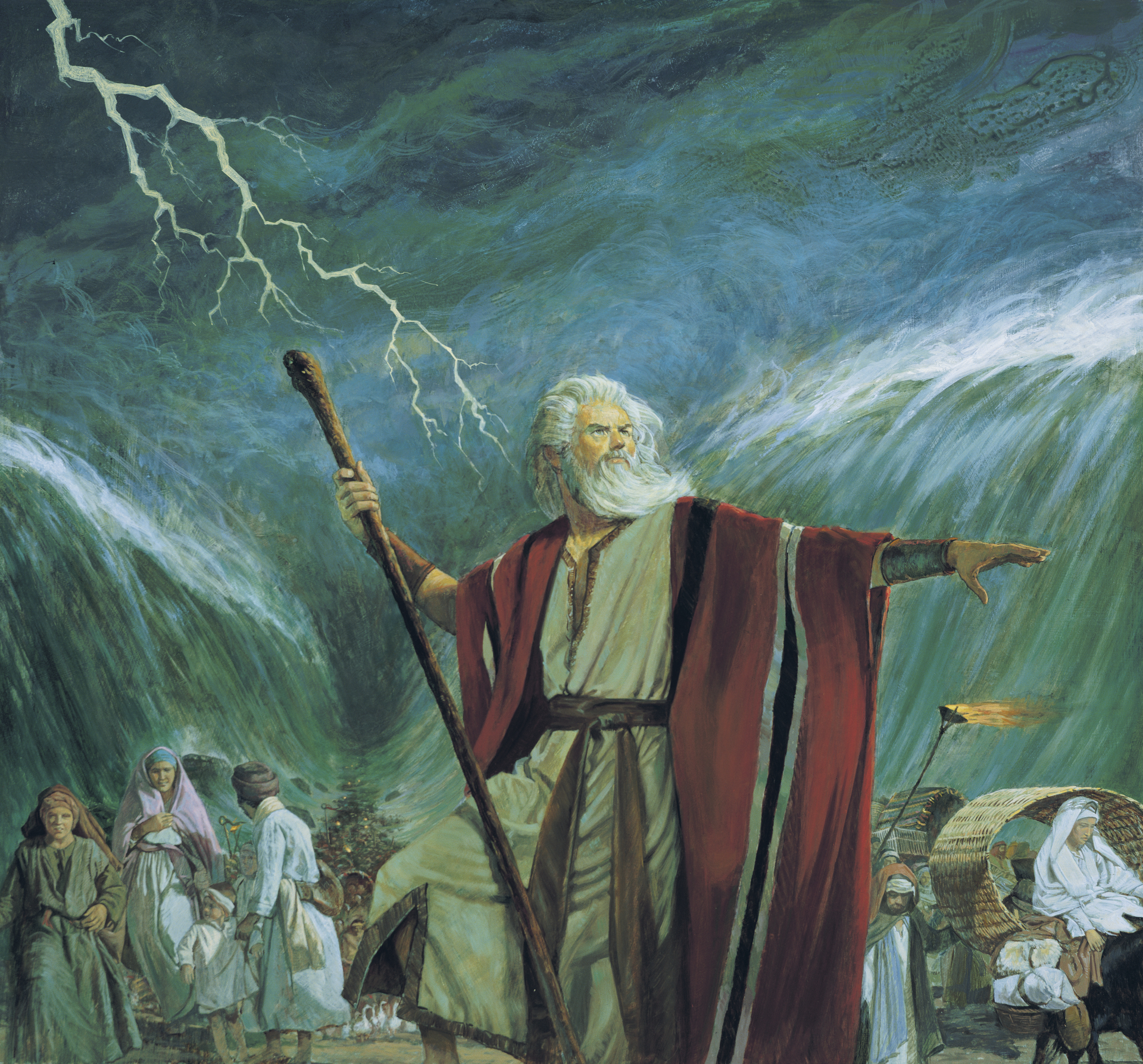
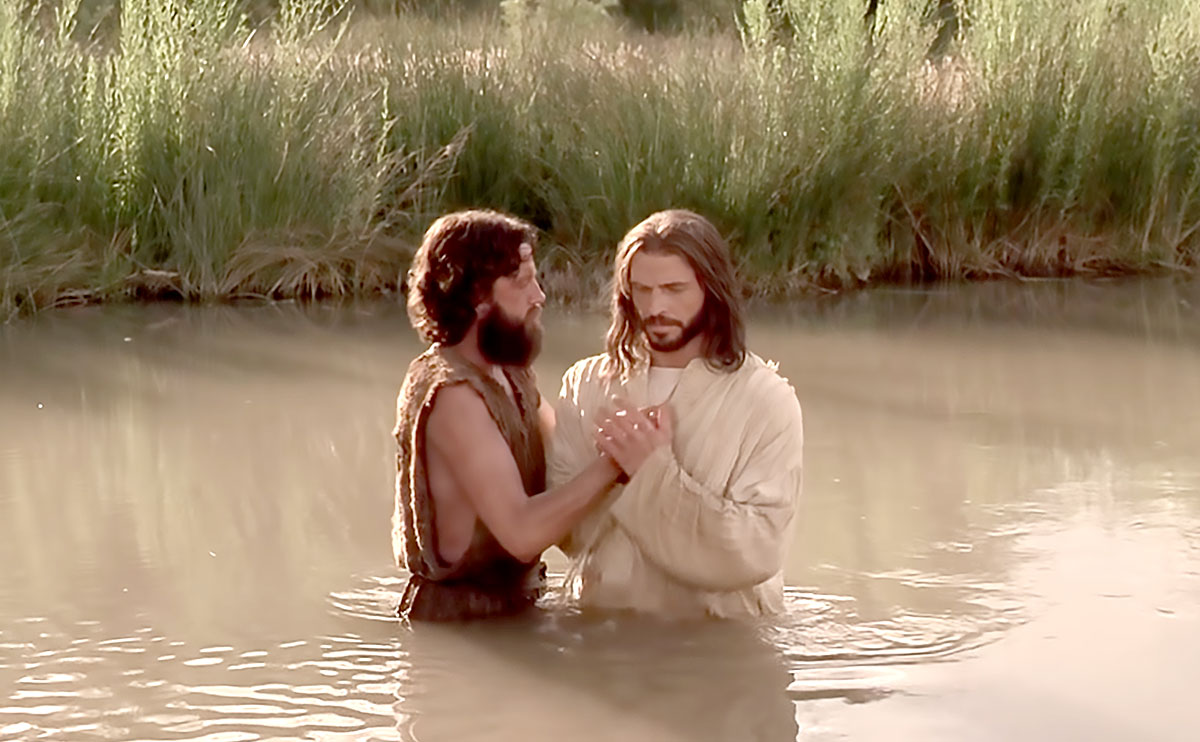

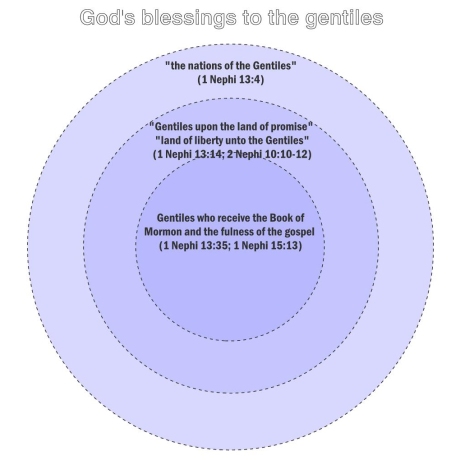

 Establishing the Cause of Zion